

Introduction
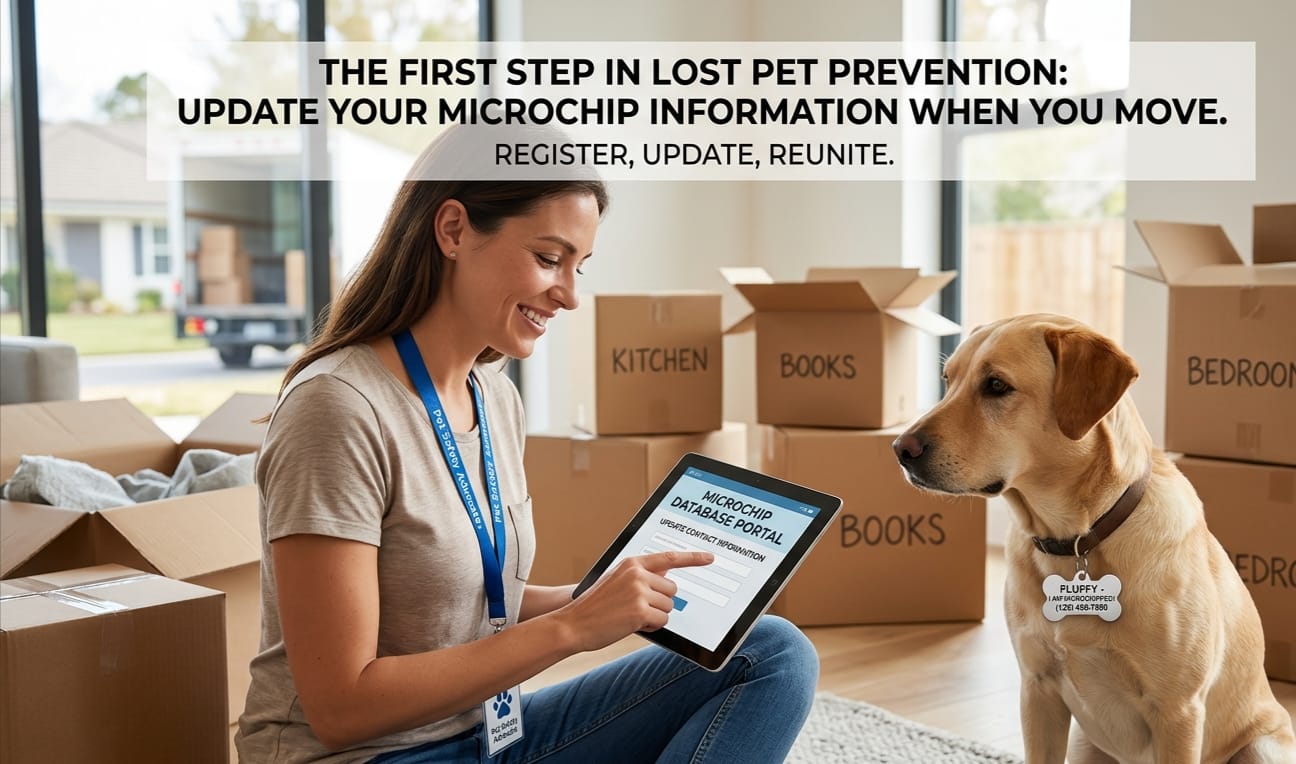
Moving to a new home is exciting, but it can also be stressful for pets. During a move, doors are often left open, strangers enter and leave the house, and pets can become anxious or frightened. This creates one of the highest risks for pets going missing.
That’s why learning how to update microchip information when you move is one of the most important steps in responsible pet ownership.
A microchip can dramatically increase the chances of a lost pet being reunited with its family. However, even the best microchip becomes useless if the contact information linked to it is outdated.
In this complete guide, you’ll learn exactly how to update your pet’s microchip records, why it matters, common mistakes to avoid, and additional lost pet prevention strategies every pet owner should know.
Why Updating Microchip Informhttps://savethislifenow.com/what-information-is-stored-on-a-pet-microchip/ation Matters
Many pet owners believe that once a microchip is implanted, their job is done. Unfortunately, this is one of the biggest misconceptions about pet microchips.
A microchip contains only a unique identification number. It does not store your current address, phone number, or email directly on the chip.
When a veterinarian or animal shelter scans your pet’s microchip, they retrieve the identification number and search the associated registry database. If your contact information is outdated, they may not be able to reach you.
Common Reasons Pets Go Missing
- Moving to a new home
- Fireworks and loud celebrations
- Thunderstorms
- Open gates or fences
- Natural disasters
- Delivery personnel leaving gates open
- Guests accidentally leaving doors open
- Traveling with pets
Because these situations are common, keeping your microchip information current is essential.
What Happens If You Don’t Update Your Microchip Information?
Failing to update your pet’s microchip records can have serious consequences.
Risks Include:
- Animal shelters cannot contact you
- Veterinarians cannot verify ownership
- Lost pets may remain in shelters longer
- Delayed reunification with your pet
- Increased emotional stress and uncertainty
Studies consistently show that microchipped pets are significantly more likely to be reunited with their owners compared to pets without identification.
How to Update Microchip Information When You Move
Follow these simple steps to ensure your pet’s microchip information remains accurate.
Step 1: Find Your Pet’s Microchip Number
Before updating records, locate your pet’s microchip number.
You can find it:
- On adoption paperwork
- On veterinary records
- On microchip registration documents
- By asking your veterinarian to scan your pet
If you cannot locate the number, your veterinarian can quickly scan your pet during a routine visit.
Step 2: Identify the Microchip Registry
Your pet’s microchip is registered with a specific database company.
Popular registries include:
- HomeAgain
- PetLink
- AKC Reunite
- 24PetWatch
If you don’t know which company manages the microchip, ask your veterinarian or use a microchip lookup service.
Step 3: Log Into Your Registry Account
Visit the registry’s website and access your account.
Most providers allow owners to update:
- Address
- Phone number
- Email address
- Emergency contacts
- Veterinarian information
Many updates take only a few minutes to complete.
Step 4: Verify All Information
Double-check:
- Mobile number
- Alternate phone number
- Email address
- New home address
- Emergency contact information
A single typo can prevent someone from reaching you if your pet is found.
Step 5: Save Confirmation Records
Keep screenshots or confirmation emails after updating your account.
This provides proof that your information was successfully changed.
What If You Don’t Know Which Registry Has Your Pet’s Microchip?
Many pet owners encounter this problem after adopting a pet or losing paperwork.
If you’re unsure:
- Visit your veterinarian.
- Have your pet scanned.
- Obtain the microchip number.
- Use a microchip lookup service.
- Contact the registry directly.
This process usually takes only a few minutes.
Moving With a Pet? Update More Than Just Your Address
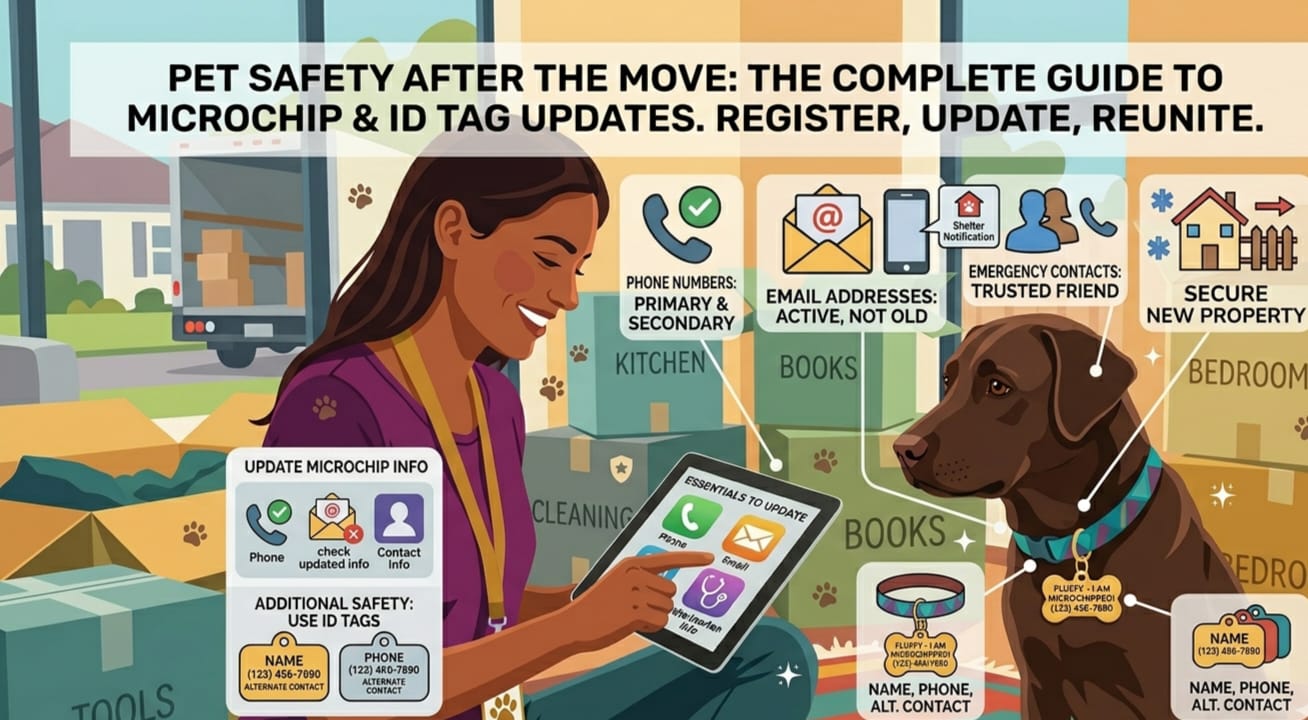
When updating microchip information, don’t stop at your home address.
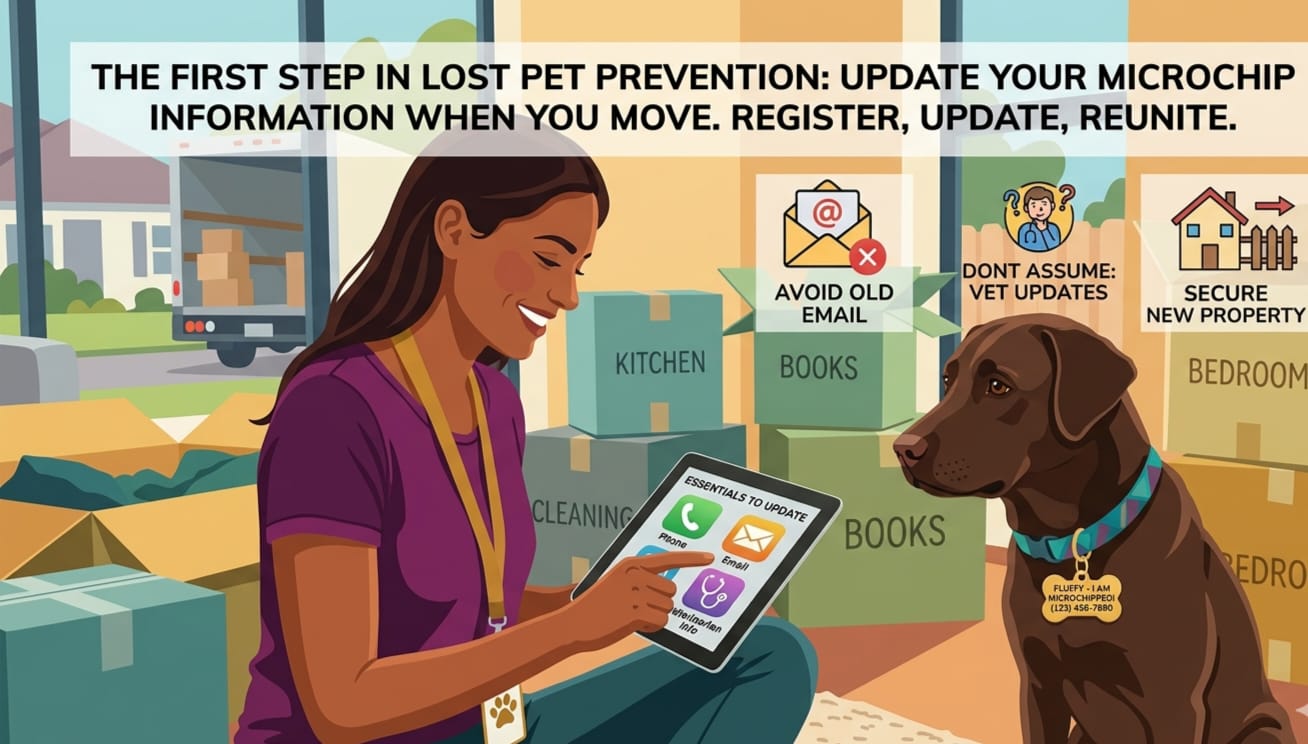
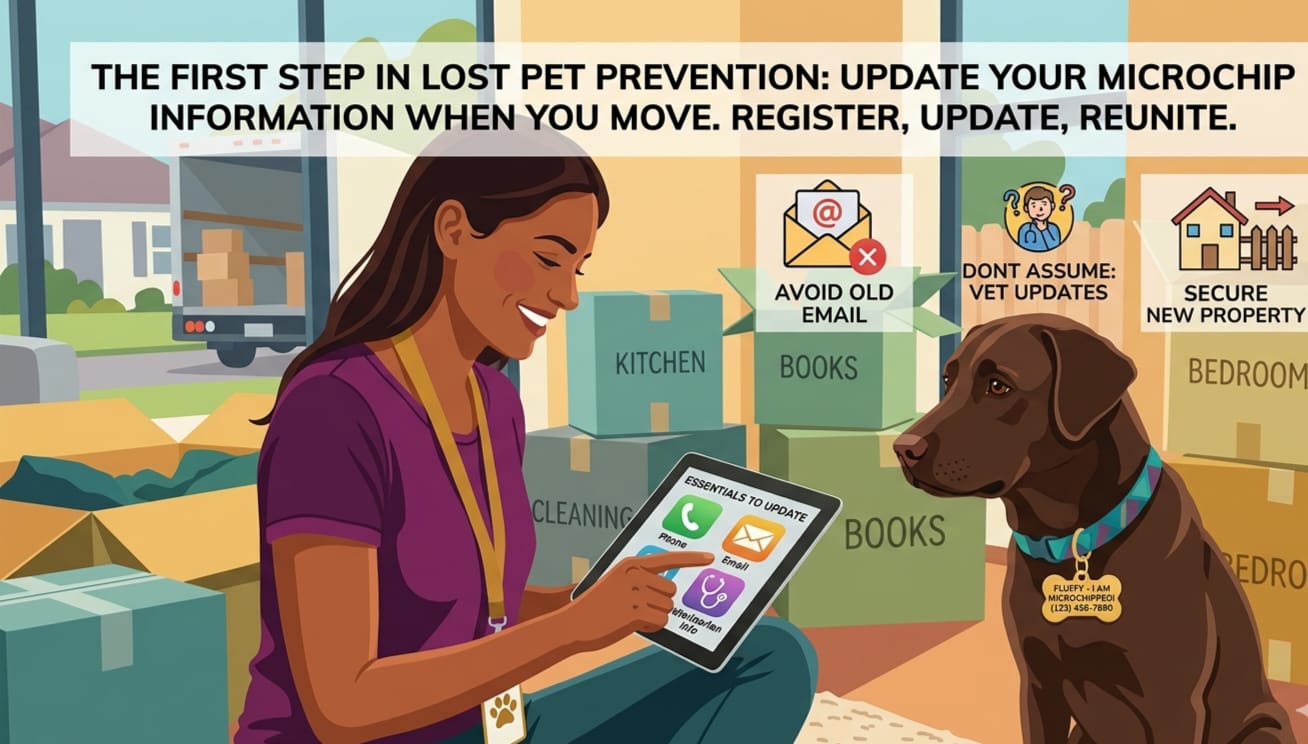
Also update:
Phone Numbers
Many reunification attempts happen by phone first.
Email Addresses
Shelters frequently send emails when phone calls fail.
Emergency Contacts
Include a trusted family member or friend.
Veterinarian Information
Current veterinary records can help verify ownership.
The Most Common Microchip Registration Mistakes
Many pet owners unknowingly make these mistakes.
Never Registering the Chip
A microchip must be registered after implantation.
Forgetting to Update Contact Information
This is the most common issue found when lost pets are scanned.
Using Old Email Addresses
Inactive email accounts prevent successful contact.
No Emergency Contact
Adding a backup contact improves recovery chances.
Assuming the Veterinarian Updates Everything
In most cases, pet owners are responsible for maintaining registration records.
Additional Lost Pet Prevention Tips
Updating microchip information when you move is important, but it should be part of a larger pet safety strategy.
Use an ID Tag
Your pet should wear a collar with:
- Name
- Phone number
- Alternate contact number
Secure Your New Home
Before bringing your pet to a new property:
- Inspect fences
- Check gates
- Repair holes
- Secure escape routes
Create a Safe Room During Moving Day
Moving day is one of the most dangerous times for pets.
Place your pet in a quiet room with:
- Food
- Water
- Toys
- Bedding
This reduces escape risks. How to Update Microchip Information When You Move
Leash Pets During Transition Periods
Even familiar pets can become disoriented after a move.
Keep dogs leashed and supervise outdoor activities closely.
Why Microchips Are Essential for Every Pet
Many owners believe indoor pets don’t need microchips.
This is incorrect.
Indoor pets can escape during:
- Moves
- Renovations
- Emergencies
- Natural disasters
A microchip provides permanent identification that cannot fall off like a collar.
How Often Should You Check Your Pet’s Microchip Information?
Experts recommend verifying your information:
- Once per year
- Before major travel
- After moving
- After changing phone numbers
- After changing email addresses
Making annual checks part of your pet care routine can prevent future problems.
Frequently Asked Questions
Can I update microchip information for free?
Many registries allow free updates, while others may charge a small fee. Check with your microchip provider.
How long does a pet microchip last?
Microchips are designed to last for your pet’s entire lifetime. Learn more in our guide:
How Long Does a Pet Microchip Last?
What should I do after microchipping my pet?
After implantation, ensure the microchip is properly registered and your contact information remains current. Read:
What to Do After Your Pet Is Microchipped
Can a microchip track my pet’s location?
No. A microchip is not a GPS device. It only contains a unique identification number.
Can I update my pet’s microchip after moving internationally?
Yes. Most major registries allow updates regardless of location.
Internal Resources You Should Read
To build a complete pet safety plan, continue with these guides:
Related Article:
How Long Does a Pet Microchip Last?
https://savethislifenow.com/how-long-does-a-pet-microchip-last/
Learn how microchips function throughout your pet’s lifetime and when they should be checked.
Related Article:
What to Do After Your Pet Is Microchipped
https://savethislifenow.com/what-to-do-after-your-pet-is-microchipped/
Discover the critical steps every pet owner should take immediately after microchipping.
Final Thoughts
Learning how to update microchip information when you move is one of the simplest yet most powerful actions you can take to protect your pet.
A microchip can only reunite you with your beloved companion if the information attached to it is accurate. Whether you’ve changed homes, phone numbers, or email addresses, taking a few minutes to update your records can make the difference between a quick reunion and a heartbreaking loss.
Don’t wait until your pet goes missing. Review your microchip registration today, update your information, and ensure your furry family member always has the best chance of finding their way back home.
