
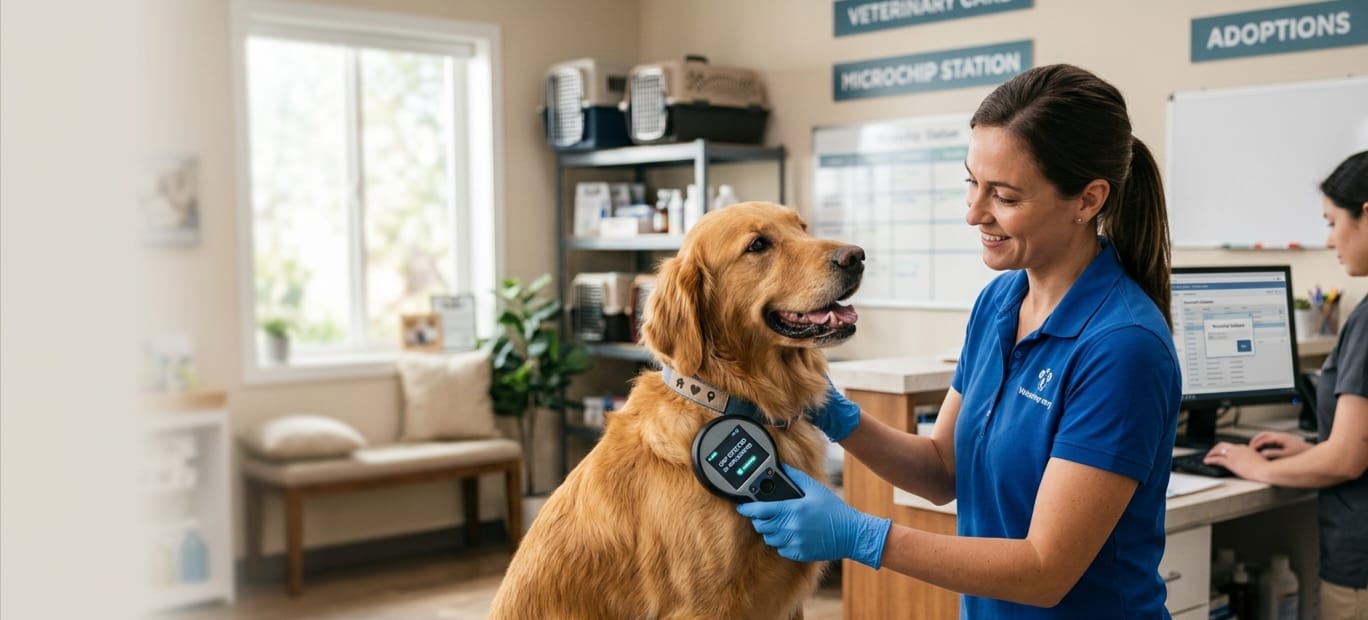
A missing pet is every owner’s worst fear. The good news is that most shelters and animal control agencies follow a consistent, well-tested process the moment a stray animal comes through the door — and microchip scanning sits right at the top of it. Understanding how shelters scan microchips when they find a lost pet can ease some of that panic and, more importantly, show you exactly why your part of the process — keeping your registration current — matters just as much as the chip itself.
Below, we walk through what actually happens behind the scenes, from intake to reunion, and what you can do today to make sure your own pet’s chip works when it counts.
Why Microchip Scanning Comes First
If you haven’t yet registered your own pet, this is a good moment to <a href=”/register-pet-microchip”>register your pet’s microchip</a> so this entire process can work in your favor.
How Shelters Scan Microchips: The Step-by-Step Process
1. Health and Safety Check First
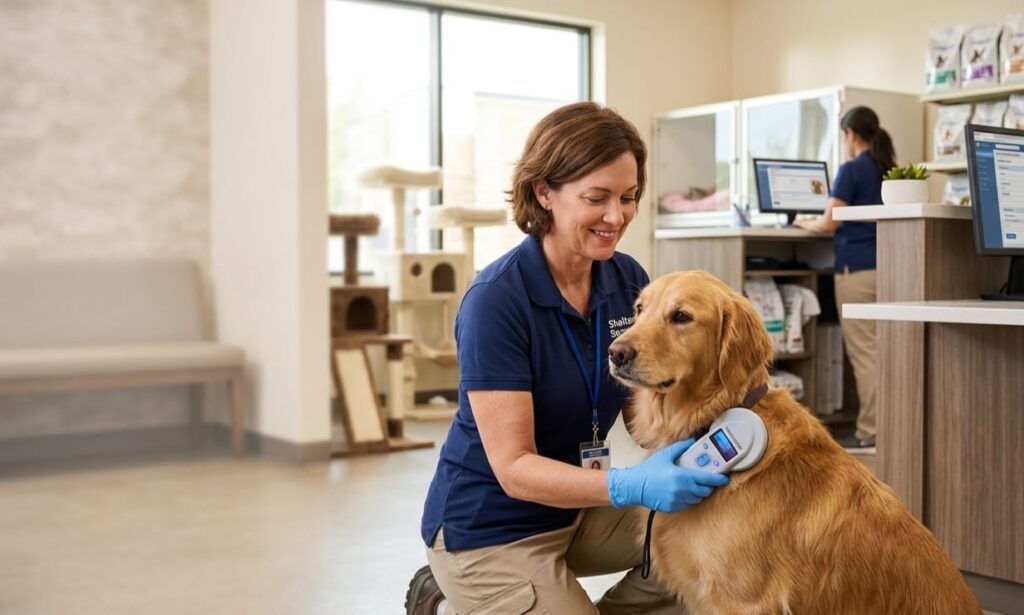
Before any scanning happens, staff quickly assess the animal for injuries, illness, or signs of distress. A pet that needs urgent medical attention gets it immediately — scanning follows once the animal is stable.
2. A Full-Body Scan, Not a Single Pass
Most people assume a microchip stays exactly where it was implanted, between the shoulder blades. In reality, chips can shift slightly over time. That’s why trained staff run the scanner across the pet’s entire body — shoulders, sides, legs, and hindquarters — rather than stopping after one pass. The scan itself takes less than a minute, but it’s done carefully to avoid missing a chip that has moved.
3. Using a Universal Scanner
Different microchip brands historically operated on different frequencies, which used to cause real headaches for shelters. Today, most facilities use universal scanners capable of reading chips from all major manufacturers, which removes that guesswork. Shelters with older equipment may still miss certain chip types, which is one reason community donations of updated scanners make a real difference.
4. Looking Up the Chip Number
Once a chip number appears on the scanner, staff enter it into a national or international lookup database — such as the AAHA Universal Pet Microchip Lookup tool — to trace which registry holds the owner’s contact details. This is the single most important handoff in the entire process, because a chip is only as useful as the information attached to it.
If your pet was adopted or you’re unsure whether your chip is linked to your details, take a moment to <a href=”/check-microchip-registration”>check your microchip registration status</a> before an emergency ever happens.
5. Multiple Contact Attempts
Shelter staff don’t stop at one phone call. They typically try several numbers, reach out to any listed emergency contacts, and sometimes attempt email or mail if that information is on file. This can stretch over several days if the first attempts don’t succeed.
6. Posting and Cross-Checking Lost Pet Reports
While contact attempts are underway, most shelters also photograph the animal and post it to their own lost-and-found listings, compare it against recent lost pet reports filed by owners, and sometimes share it on social media or with local rescue networks.
Why Registration Status Changes Everything

Here’s the part many pet owners don’t realize: having a microchip and having a registered microchip are two very different things. A chip that was implanted but never linked to an owner’s name and phone number shows up on the scanner as nothing more than a number — there’s no one to call.
Industry data from animal welfare groups suggests a significant share of microchipped pets entering shelters have chips that were never registered at all, which means the technology exists in the animal but does nothing to help bring them home. Even when a chip is registered, outdated details cause the same dead end: disconnected phone numbers, old addresses, or bounced emails all bring the search to a halt.
This is exactly why we built our <a href=”/microchip-registry”>microchip registry</a> to make updates fast and free of hassle — because an outdated record is functionally the same as no record at all.
What Happens If Contact Attempts Fail
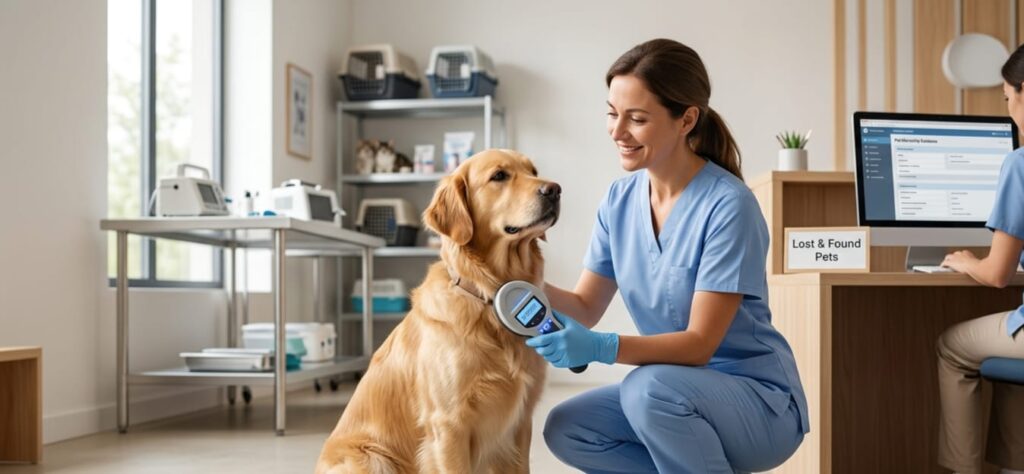
If a shelter can’t reach an owner, they don’t give up immediately. Most facilities are legally required to hold a stray animal for a minimum period — commonly three to seven days, depending on local regulations — before the pet becomes eligible for adoption or transfer to a rescue. Shelters often extend this window when a microchip is present, since the odds of eventually reaching an owner are higher than for an animal with no identification at all.
Pets with unregistered chips, unfortunately, are usually treated the same as pets with no chip once that hold period ends. That single gap — implant without registration — is the most preventable failure point in the entire reunification system.
Three Things That Actually Improve Your Odds
- Register the chip, not just implant it. A chip sitting unregistered in a database does nothing when a shelter scans it.
- Keep contact details current. Update your phone number, address, and email any time they change — see our guide on <a href=”/update-pet-contact-info”>updating your pet’s contact information</a> for a quick walkthrough.
- Add a backup ID. A collar and tag give anyone who finds your pet — not just a shelter with a scanner — an immediate way to reach you.
If your pet does go missing, don’t wait passively for a call. Proactively <a href=”/report-lost-pet”>report your lost pet</a> and contact nearby shelters directly, since reaching out yourself often shortens the timeline considerably.
Frequently Asked Questions
What is the first thing shelters do when a lost pet arrives? After a basic health and safety check, staff perform a full-body microchip scan using a universal scanner, checking multiple areas since chips can shift position over time.
How long does it take shelters to scan a microchip? The physical scan itself takes under a minute, though staff move carefully across the pet’s entire body to avoid missing a chip.
Does having a microchip guarantee my pet will be identified? No. A microchip only works if it’s registered with current contact information. An unregistered or outdated chip often results in the same outcome as having no chip at all.
How long do shelters hold a pet before making them available for adoption? Most shelters hold stray animals for three to seven days, though this period is often extended when a microchip is detected, since staff continue trying to reach the owner.
What should I do if my pet goes missing? Report your pet as lost, contact shelters and vet clinics directly, and check your microchip registration to confirm your contact details are current — don’t wait for a phone call.
