

Meta Title: What Information Is Stored on a Pet Microchip? Complete Guide
Meta Description: What information is stored on a pet microchip? Learn what a pet microchip contains, what is stored in the database, and how microchips help reunite lost pets with their owners.
Focus Keyword: What Information Is Stored on a Pet Microchip
SEO URL Slug: what-information-is-stored-on-a-pet-microchip
What Information Is Stored on a Pet Microchip?
Many pet owners understand that microchipping helps reunite lost pets with their families, but one question continues to cause confusion:
What information is stored on a pet microchip?
Some people believe a microchip stores their address, phone number, pet’s medical history, or even GPS tracking information. In reality, pet microchips work very differently.
Understanding what information is stored on a pet microchip is important because it helps pet owners appreciate why registration and updating contact details are just as important as the chip itself.
In this complete guide, you’ll learn exactly what a microchip contains, what information is stored in the registration database, and how microchips help bring lost pets home safely.
What Is a Pet Microchip?
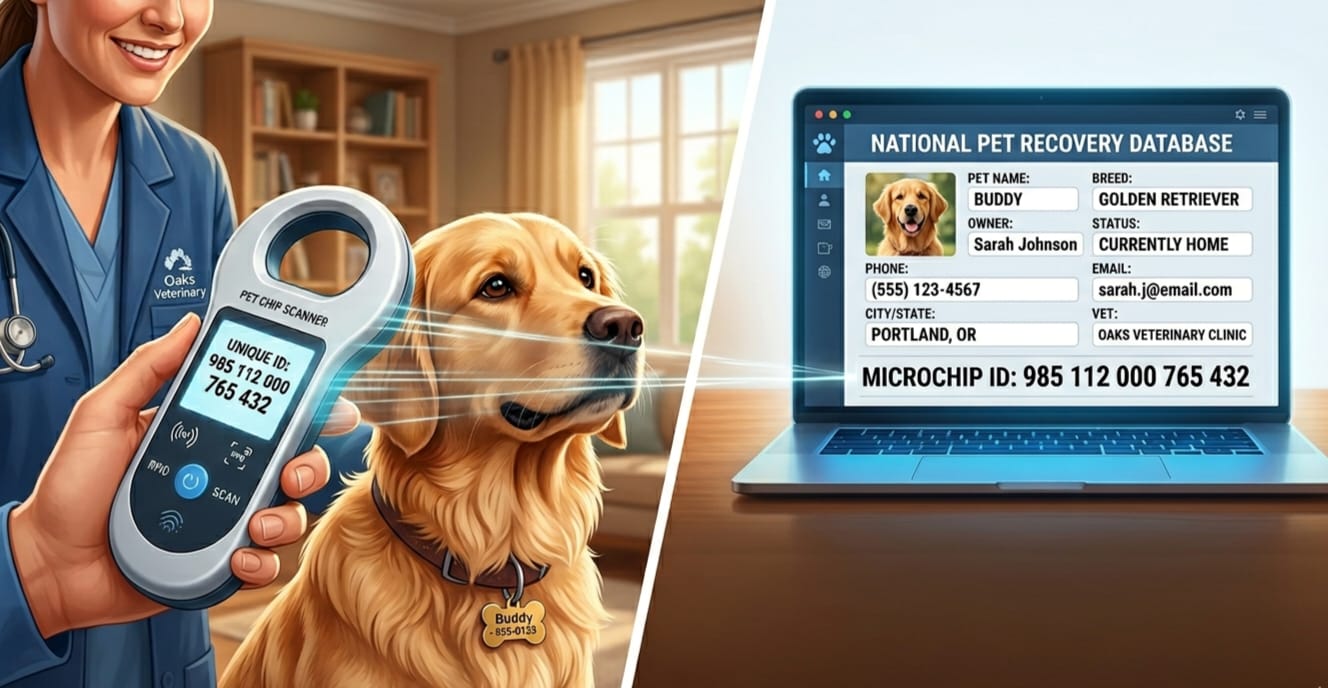
A pet microchip is a tiny electronic device about the size of a grain of rice. It is implanted beneath your pet’s skin, usually between the shoulder blades.
The chip uses Radio Frequency Identification (RFID) technology and contains no battery. Instead, it remains inactive until a compatible scanner passes over it.
When scanned, the microchip transmits a unique identification number that can be used to identify the pet and locate the owner through a registered database.
If you’re new to pet microchipping, read our guide on How Pet Microchips Work and Why Every Pet Needs One.
What Information Is Stored on a Pet Microchip?
The answer is surprisingly simple.
A Pet Microchip Stores Only One Piece of Information
A pet microchip stores:
A unique identification number
Most modern microchips use a 15-digit identification number that follows international standards.
Example:
985141000123456
This number acts as a digital fingerprint for your pet.
That’s all the microchip contains.
What Information Is NOT Stored on a Pet Microchip?
One of the biggest misconceptions about pet microchips is that they contain personal information.
A microchip does NOT store:
- Your name
- Your home address
- Your phone number
- Your email address
- Your pet’s name
- Your pet’s breed
- Medical records
- Vaccination history
- Insurance information
- GPS location data
This surprises many pet owners who assume veterinarians can immediately see all their information when scanning a chip.
In reality, the scanner only displays the unique identification number.
Where Is the Owner’s Information Actually Stored?
If the microchip contains only a number, where is the rest of the information?
The answer is simple:
It Is Stored in a Microchip Registration Database
When your pet is microchipped, the unique chip number is linked to your information in a secure database.
The database stores information such as:
- Owner’s name
- Home address
- Mobile phone number
- Alternate phone number
- Email address
- Pet’s name
- Breed
- Gender
- Color
- Date of birth
- Special markings
When a veterinarian, shelter, or animal rescue scans the chip, they retrieve the microchip number and search the database to find the owner’s contact details.
Information Stored on the Microchip vs Database
| Information | Stored on Chip | Stored in Database |
|---|---|---|
| Microchip Number | Yes | Yes |
| Owner Name | No | Yes |
| Address | No | Yes |
| Phone Number | No | Yes |
| Email Address | No | Yes |
| Pet Name | No | Yes |
| Breed | No | Yes |
| Date of Birth | No | Yes |
| Medical Records | No | Sometimes |
| GPS Location | No | No |
This distinction is crucial because the database—not the chip—is what helps reunite lost pets with their families.
Does a Pet Microchip Have GPS Tracking?
No.
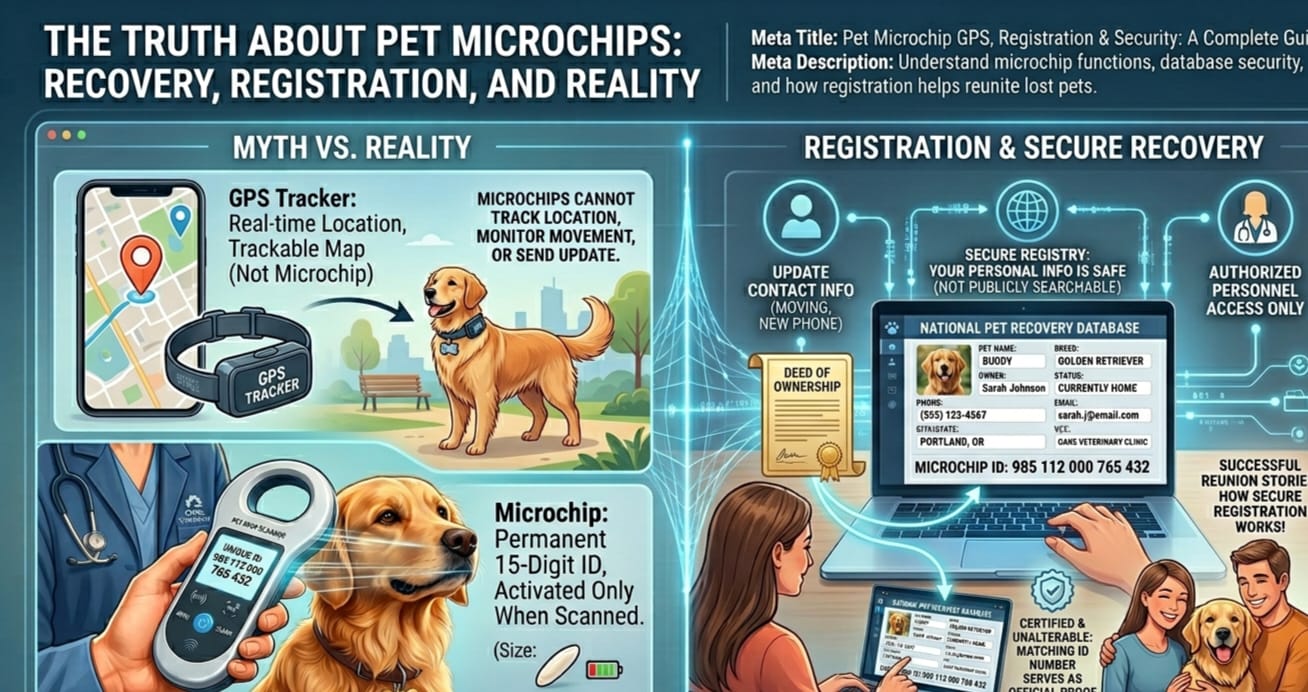
A pet microchip does not contain GPS technology.
This is one of the most searched questions about microchips.
Microchips cannot:
- Track your pet’s location
- Show your pet on a map
- Send location updates
- Monitor movement
A microchip only provides identification when scanned by a veterinarian or shelter.
If you want real-time tracking, you need a dedicated GPS pet tracker attached to your pet’s collar.
Learn more in our guide: Do Pet Microchips Have GPS? The Complete Truth Explained.
Why Registration Is Just as Important as Microchipping
A microchip without registration is almost useless.
Think of it this way:
The chip number is like a key.
The database is the lock it opens.
Without a database record connected to the chip number, there is no way to identify the owner.
This means:
- A lost pet may never be reunited.
- Shelters cannot contact you.
- Veterinarians cannot verify ownership.
Many lost pets are found with microchips that were never registered or contain outdated information.
Why You Must Keep Your Contact Information Updated
The effectiveness of a microchip depends entirely on accurate information.
You should update your registration whenever:
- You move to a new home.
- You change your phone number.
- You change your email address.
- Your pet changes ownership.
- Emergency contact information changes.
Even a perfectly functioning microchip cannot help if the database contains old contact information.
Experts recommend updating your pet’s registration within a week of any major life change.
Is My Personal Information Safe?
Yes.
Reputable microchip registries use secure databases to protect owner information.
Typically:
- Personal information is not publicly searchable.
- Access requires the complete microchip number.
- Only authorized personnel can perform official lookups.
- Data is protected through privacy and security measures.
This means someone cannot simply search online and view your personal information without the correct microchip number.
Real-Life Success Stories of Microchipped Pets
Microchips have reunited countless pets with their owners.
In one remarkable case, a lost dog was reunited with her family after being found more than 260 miles away from home.
Animal shelters frequently report successful reunions months and even years after pets disappear because a microchip provided a permanent form of identification.
Unlike collars and tags, which can fall off or be removed, a microchip remains with your pet for life.
That’s why many veterinarians consider microchipping one of the most effective pet safety measures available.
Benefits of Pet Microchipping
Permanent Identification
Microchips provide lifelong identification that cannot be lost like collars or tags.
Faster Reunions
Shelters and veterinarians can quickly identify lost pets and contact owners.
Increased Recovery Rates
Microchipped pets are significantly more likely to be returned home.
Proof of Ownership
Microchip registration can help verify ownership in disputes.
Peace of Mind
Knowing your pet has permanent identification offers valuable reassurance.
Frequently Asked Questions
What information is stored on a pet microchip?
Only a unique identification number is stored on the microchip itself.
Can someone track my dog through a microchip?
No. Pet microchips do not contain GPS tracking technology.
Can a veterinarian see my address from the chip?
No. The scanner only displays the microchip number. Your address is stored in the registration database.
What happens if my pet’s microchip is not registered?
The chip number cannot be linked to your contact information, making recovery much more difficult.
How long does a pet microchip last?
Most pet microchips are designed to last for the pet’s entire lifetime.
Final Thoughts
Understanding what information is stored on a pet microchip helps clear up many common misconceptions.
The microchip itself stores only a unique identification number. Your personal information and your pet’s details are securely stored in a registration database linked to that number.
This is why registration and keeping your contact details current are essential. A microchip can only help bring a lost pet home if the database contains accurate information.
Microchipping remains one of the safest, most reliable, and most effective ways to protect your pet and dramatically increase the chances of a happy reunion if they ever go missing.
Related Articles
- How to Check If Your Dog Is Already Microchipped
- Do Pet Microchips Have GPS Tracking?
- Can a Pet Microchip Be Removed?
- How Long Do Pet Microchips Last?
- What Happens After a Pet Is Microchipped?
- Why Every Dog and Cat Should Be Microchipped
