

Pet SafetyBy Save This Life Now TeamUpdated: April 2026⏱ 8 min read
This is the question almost every dog owner asks before booking the appointment — and it is completely understandable. Nobody wants to put their dog through unnecessary pain. So let’s be completely honest with you: microchipping a dog causes minimal pain, is over in under 30 seconds, and is one of the safest routine procedures a vet performs. But we know you want the full picture, so let’s walk through everything — exactly what happens, what it feels like, and what to watch for afterward.
Direct Answer
Does microchipping a dog hurt? For most dogs, microchipping causes the same brief discomfort as a routine vaccine shot — a quick pinch lasting less than a second. The needle is slightly larger than a vaccine needle, but the loose skin between the shoulder blades has relatively few pain receptors. Most dogs don’t react at all. Any mild tenderness at the site usually resolves within 24–48 hours. No anesthesia is needed.
Table of Contents
- How Painful Is Microchipping, Really?
- Microchipping vs. a Vaccine Shot: How Do They Compare?
- What Exactly Happens During the Procedure
- What Your Dog Actually Feels
- Side Effects and Risks: What to Watch For
- What About Anxious or Sensitive Dogs?
- Does It Hurt Puppies More Than Adult Dogs?
- Tips to Make Microchipping Easier for Your Dog
- Common Myths About Microchipping Pain — Debunked
- Frequently Asked Questions
How Painful Is Microchipping a Dog, Really?
Let’s put this in plain terms. On a scale of 1 to 5 — where 1 is no pain and 5 is severe pain — microchipping sits firmly at a 1 to 1.5 for the overwhelming majority of dogs.
Dog Pain Scale — Where Microchipping Falls
1
None
2
Mild
3
Moderate
4
Strong
5
Severe
No reactionSevere distress
Microchipping sits here: Level 1–1.5
To give you a comparison: dental cleaning under anesthesia sits at a 3–4 on recovery. Spaying or neutering sits at a 3 during recovery. A routine vaccine sits at about a 1. Microchipping is equivalent to or slightly more than a vaccine. Nothing more.
In fact, most veterinarians report that dogs are more stressed by being placed on the exam table, held still, or hearing the sound of the scanner than by the actual needle. The physical discomfort of the implant itself is genuinely brief and mild for the vast majority of gos
<30s
Total procedure time from needle to done
<1s
Duration of the actual needle insertion
~80%
Dogs show no noticeable reaction at all
0
Anesthesia required for healthy dogs
Microchipping vs. a Vaccine Shot: How Do They Compare?
The most useful way to understand microchipping pain is to compare it to something you already know — your dog’s vaccine shots. Here is an honest, side-by-side comparison:
Standard Vaccine Shot
Needle sizeSmall (25–27 gauge)
Injection depthSubcutaneous or muscle
DurationUnder 5 seconds
Pain levelBrief pinch
Anesthesia neededNo
AftercareUsually none
Microchip Implant
Needle sizeSlightly larger (12 gauge)
Injection depthSubcutaneous only
DurationUnder 30 seconds total
Pain levelBrief pinch — same or slightly more
Anesthesia neededNo
AftercareUsually none; monitor 24–48 hrs
The key difference is needle size. A microchip needle (12 gauge) is wider than a vaccine needle to accommodate the chip. However, the implant location — the loose skin between the shoulder blades — has fewer pain receptors than muscle tissue, which partly compensates for the larger needle size. The net experience for most dogs is comparable to a vaccine.
In my 15 years of practice, the dogs that react most to microchipping are usually the ones who are already anxious about being at the vet. The procedure itself is genuinely brief. Most dogs are more bothered by me holding their scruff than by the needle.
— General sentiment expressed by veterinarians across the profession
What Exactly Happens During the Microchipping Procedure
Understanding the process step by step helps you know exactly what your dog will https://savethislifenow.com/complete-guide-pet-microchipping/experience — and removes the fear of the unknown. Here is the complete walkthrough:
Your dog is placed on the exam table
For most dogs this is the most stressful part — not the chip. The vet or vet tech will gently hold your dog still. You can stay in the room and comfort your dog throughout.
The implant site is located
The standard implant site is the loose skin between your dog’s shoulder blades — specifically in the subcutaneous tissue layer just beneath the outer skin. This location is universal so any scanner knows exactly where to look.
The pre-loaded needle is positioned
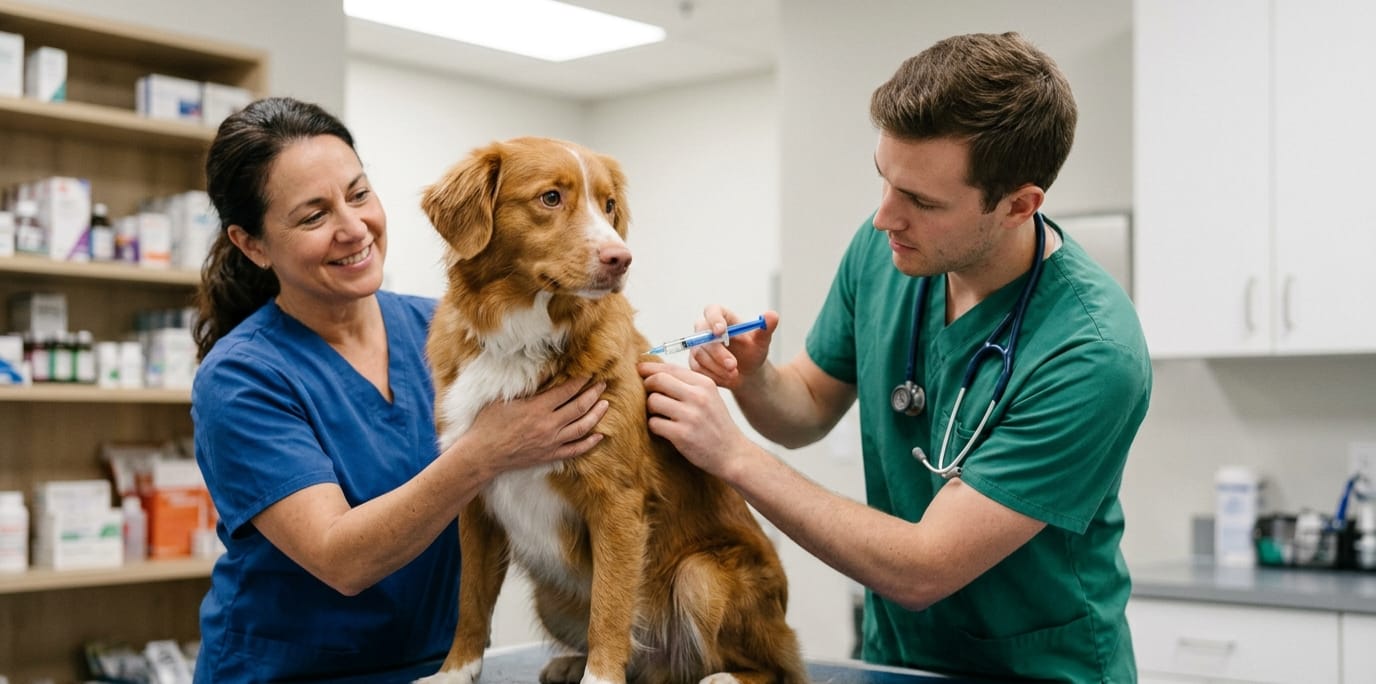
The microchip comes pre-loaded in a sterile, single-use syringe. The vet pinches the loose skin between two fingers to create a small tent of skin — this actually reduces the sensation of the needle and keeps the chip in the correct tissue layer.
The chip is implanted — in under one second
The vet inserts the needle and presses the plunger. The chip slides out and the needle is withdrawn immediately. The whole insertion takes less than a second. This is the moment of maximum discomfort — and for most dogs, it passes without any reaction at all.
The chip is immediately scanned to verify
The vet waves a scanner over the implant site to confirm the chip is reading correctly and records the 15-digit number. This takes about 10 seconds and involves no discomfort whatsoever.
Done — your dog can have a treat immediately
The entire procedure from needle to done takes under 30 seconds. Most dogs are wagging their tail and sniffing around the room within moments. Bring your dog’s favorite treats to reward them right after — this creates a positive association with the experience.
What Your Dog Actually Feels During Microchippinghttps://savethislifenow.com/how-to-find-a-lost-dog-fast-proven-steps/
Obviously we can’t ask our dogs — but based on their behavioral reactions and what we know about canine pain receptors and the anatomy of the implant site, here is the most accurate picture we can give you:
During the needle insertion (under 1 second):
Your dog will likely feel a brief pressure or pinching sensation as the needle passes through the skin. The loose skin between the shoulder blades has a relatively sparse distribution of pain receptors compared to more sensitive areas like the face, paws, or muscle tissue. This is precisely why this location was chosen as the universal implant site.
Immediately after (first few minutes):
The vast majority of dogs show no behavioral signs of pain after the needle is withdrawn. They may shake their fur, look around, or immediately go back to sniffing — which in dog language is a “I’m fine, that was nothing” signal. A small number of dogs may flinch slightly or let out a brief yelp at the moment of insertion, but this passes instantly.
In the hours after (same day):
Some dogs may have mild tenderness when the implant site is touched directly. This is normal and typically resolves within 24 hours. You might notice your dog scratching at the area occasionally. Most dogs show no signs of discomfort at all and behave completely normally within minutes of leaving the vet.
What Dog Owners Say
The most common thing pet owners say after their dog’s microchipping appointment is some version of: “I was more nervous about it than my dog was.” The anxiety beforehand is almost always far greater than the procedure warrants.
Side Effects and Risks: What to Watch For After Microchippinghttps://savethislifenow.com/common-pet-safety-mistakes-dogs-cats-2/
Microchipping is considered one of the safest routine veterinary procedures available. Serious complications are genuinely rare. Here is a complete, honest breakdown of everything that can happen — from the common to the extremely rare:
| Side Effect | How Common | What to Do |
|---|---|---|
| Brief flinch or yelp at insertion | ● Common (~20% of dogs) | Normal — passes immediately. Comfort your dog and offer a treat. |
| Mild tenderness at implant site | ● Occasional (10–15%) | Normal. Avoid pressing on the area for 24–48 hours. Resolves on its own. |
| Small lump at injection site | ● Uncommon (~5%) | Usually scar tissue forming around the chip. Harmless. Mention to vet at next visit. |
| Chip migration | ● Uncommon | The chip moves slightly from original location. Harmless — scanners check the whole area. |
| Minor swelling lasting 1–2 days | ● Uncommon | Normal healing response. Apply a cool cloth if your dog seems bothered. See a vet if swelling increases after 48 hours. |
| Infection at implant site | ● Very rare | Signs: increasing redness, warmth, discharge. See your vet immediately if these appear. |
| Chip failure (stops reading) | ● Very rare | Ask your vet to scan the chip at annual visits to confirm it’s still working. |
| Tumor at implant site | ● Extremely rare | A handful of cases have been reported globally. No scientific study has established a causal link. Major vet organizations worldwide consider microchipping safe. |
When to Call Your Vet After Microchippin
Contact your vet if you notice any of the following after microchipping: swelling that gets worse after 48 hours, redness or warmth spreading from the injection site, discharge or oozing, your dog excessively licking or scratching the area, or any signs of lethargy or loss of appetite lasting more than a day. These symptoms are rare but worth taking seriously.
https://www.petmd.com/dog/conditions/behavioral/dog-anxietyWhat About Anxious or Sensitive Dogs?
If your dog is already nervous at the vet, you may be wondering whether microchipping will be extra distressing for them. Here is what you need to know:
Anxiety and pain are two different things. An anxious dog may react more dramatically to microchipping than a calm dog — not because it hurts more, but because they are already in a state of stress. A dog that trembles during nail trims may yelp at the chip needle even though the physical sensation is no different than for a confident dog.
Breeds Often More Sensitive at the Vet
- Chihuahuas
- Yorkshire Terriers
- Border Collies
- German Shepherds
- Rescue dogs with trauma history
- Any dog with vet anxiety
Breeds That Tend to Stay Calm
- Labrador Retrievers
- Golden Retrievers
- Beagles
- Bulldogs
- Pugs
- Dogs with regular vet visits
If your dog has severe vet anxiety, talk to your vet beforehand. Options include scheduling the appointment at a quieter time, using calming aids like adaptil sprays, or — for very anxious dogs — combining microchipping with a spay/neuter procedure when anesthesia is already being used.
Does Microchipping Hurt Puppies More Than Adult Dogs?https://www.reddit.com/r/Pets/comments/14kvh54/i_microchipped_my_dog_did_i_make_a_mistake/
This is a common concern — and the honest answer is no, puppies don’t experience more pain from microchipping than adult dogs.
Puppies do have thinner, more delicate skin, but the implant site between the shoulder blades is still the same loose subcutaneous tissue. The procedure, chip size, and needle are identical. What changes is that puppies may have less experience with handling and may be more wiggly or surprised — but this is behavioral, not a difference in pain level.
Most vets recommend microchipping puppies at their first or second vaccination visit, typically around 6–8 weeks of age. At this age puppies are usually more accepting of handling and recover their cheerful bouncy behavior within seconds of the procedure.
Best Time to Microchip a Puppy
If your puppy is being spayed or neutered, ask your vet to microchip them at the same time while they are under anesthesia. This means zero discomfort whatsoever from the chip — and it’s the most convenient time since they’re already at the clinic.
Tips to Make Microchipping as Easy as Possible for Your Doghttps://atlaspethosp.com/a-simple-guide-to-dog-microchipping-every-owner-should-read/
Even though microchipping is genuinely quick and low-pain, there are things you can do to make the experience even smoother for your dog:
Bring high-value treats
Bring your dog’s absolute favorite treats — something they don’t get every day. Give them right after the chip is in. This creates a positive association with the vet experience.
Stay calm yourself
Dogs are extremely sensitive to their owner’s emotional state. If you are anxious, your dog will sense it. Take a breath, speak in a cheerful voice, and project confidence.
Exercise beforehand
A tired dog is a calmer dog. Take your dog for a good walk or play session before the vet appointment to burn off excess energy and reduce anxiety.
Schedule at a quiet time
Ask your vet when the clinic is least busy. A quieter waiting room means less stress before the procedure even starts.
Practice handling at home
Regularly touch your dog’s scruff and back between visits so they are comfortable being handled in that area. Dogs that are used to this react much less to the chip needle.
Ask about calming aids
For very anxious dogs, ask your vet about adaptil (dog appeasing pheromone) spray or collar, or whether a mild pre-visit calming supplement might help.
Common Myths About Microchipping Pain — Debunked
Myth
“The needle is huge and must be incredibly painful.”
Fact
The needle is larger than a vaccine needle, but the implant site has few pain receptors and the insertion takes under one second. Most dogs don’t react at all.
Myth
“My dog will need pain medication after microchipping.”
Fact
Pain medication is not needed or recommended after a routine microchip implant. The procedure causes no lasting tissue damage or inflammation that would require medication.
Myth
“Small dogs suffer more because the needle is proportionally larger.”
Fact
The same standard chip and needle are used for all dog sizes. Small dogs may react more due to anxiety, not pain. The implant location and technique are identical regardless of size.
Myth
“Microchipping is too risky — it can cause cancer.”
Fact
A very small number of tumor cases near chip sites have been reported globally, but no scientific study has proven a causal link. The American Veterinary Medical Association, British Veterinary Association, and veterinary bodies worldwide endorse microchipping as safe.
Myth
“I should wait until my dog is older so it doesn’t hurt as much.”
Fact
There is no benefit to waiting. Puppies can be safely microchipped from 6–8 weeks old. The earlier you chip, the sooner your pet is protected — and every day without a chip is a day they could go missing without identification.
Ready to Microchip Your Dog?
Now that you know the truth about microchipping pain, there is no reason to wait. Call your vet today or find a free microchipping event near you.Read Our Complete Microchipping Guide →See Microchipping Costs & Free Options →
Aftercare Checklist: What to Do After Your Dog Is Microchipped
The procedure is done in under 30 seconds — but here is what to do in the hours and days after to make sure everything goes smoothly:
- Give your dog their favorite treat immediately after the procedure — positive reinforcement matters
- Let your dog rest normally — no need to restrict activity unless your vet advises otherwise
- Check the injection site gently once a day for the first 48 hours for any swelling or redness
- Avoid pressing directly on the implant site for the first 24 hours
- Call your vet if swelling increases after 48 hours or if you see any discharge
- Register the chip number online within 24 hours — go to foundanimals.org (free)
- Verify registration at lookup.aaha.org to confirm the chip is searchable
- Write the 15-digit chip number somewhere safe — you will need it for registration
Frequently Asked Questions: Does Microchipping a Dog Hurt?
Does microchipping a dog hurt?+
For most dogs, microchipping causes the same brief discomfort as a routine vaccine injection — a quick pinch lasting less than one second. The needle is slightly larger than a vaccine needle, but the implant location between the shoulder blades has few pain receptors. The vast majority of dogs show little to no reaction. Any mild soreness at the site typically resolves within 24–48 hours. Do dogs need anesthesia for microchipping?+
No. Microchipping does not require anesthesia or sedation for healthy dogs. The procedure is quick enough that putting a dog under anesthesia would create far more risk than the implant itself. The only exception is when a dog is already being anesthetized for another procedure — in that case, vets recommend chipping at the same time since it adds zero discomfort. How long does any pain last after microchipping?+
The discomfort from the needle itself lasts less than one second. After the procedure, the majority of dogs show no signs of pain at all. In cases where mild tenderness occurs at the injection site, it typically resolves within 24 hours — rarely longer than 48 hours. No pain medication is needed. Can microchipping hurt a small dog or puppy more?+
The same chip, needle, and technique are used for all dog sizes and ages, including puppies from 6–8 weeks old. Small dogs and puppies may react more expressively due to anxiety or surprise rather than greater pain. The implant site and procedure are the same regardless of your dog’s size or age. My dog screamed when microchipped — did something go wrong?+
Not necessarily. Some dogs — especially anxious ones — vocalize dramatically to any needle procedure regardless of actual pain level. A yelp or brief cry at the moment of insertion is a normal stress response. If your dog returns to normal behavior within seconds and shows no signs of ongoing distress, the procedure most likely went fine. If they seem in significant pain hours later or the site swells significantly, contact your vet. Are there any risks to microchipping a dog?+
Microchipping is considered very safe. Rare complications include minor swelling or tenderness (resolves in 24–48 hours), chip migration (harmless), a small lump of scar tissue, or — very rarely — infection. Extremely rare cases of tumors near implant sites have been reported, but no scientific study has established a causal link. All major veterinary organizations worldwide endorse microchipping as safe and beneficial. What should I watch for after my dog is microchipped?+
Most dogs need no special monitoring. For the first 48 hours, gently check the injection site once a day. Contact your vet if you see swelling that worsens after 48 hours, redness or warmth spreading from the site, any discharge, or if your dog seems in persistent pain. These symptoms are uncommon but should be evaluated by a professional.
The Bottom Line: Don’t Let Fear of Pain Stop You
The fear that microchipping will hurt your dog is completely understandable — it comes from a place of love. But the truth is that the procedure causes minimal, momentary discomfort for the vast majority of dogs, is over in under 30 seconds, and requires no recovery time at all.
What does hurt? Losing your dog and never seeing them again. Every year, millions of pets go missing. Without a microchip, the odds of a reunion drop dramatically. With a registered chip, your dog has a permanent, unforgeable ID that works for their entire life — through collar loss, natural disasters, theft attempts, and all the other ways a pet can become separated from their family.
Thirty seconds of mild discomfort today. A lifetime of protection. That is what microchipping gives your dog. Call your vet this week and get it done.
Related Articles on Save This Life Now
- Complete Guide to Pet Microchipping (Pillar Article)
- How Much Does It Cost to Microchip a Dog? (2026 Prices)
- How to Register a Pet Microchip (Step-by-Step Guide)
- How to Check If Your Dog Is Already Microchipped
- Microchipping Cats: Complete Guide for Cat Owners
- My Dog Is Missing: What to Do in the First 24 Hours
