


Losing a pet even once is a heartbreaking experience. Once your dog or cat is safely back home, 2nd important step is making sure it never happens again. Many pets go missing repeatedly due to simple, avoidable issues. This Prevent Your Pet From Getting Lost Again guide will walk you through practical, proven strategies to prevent future escapes, avoid common pet safety mistakes, and follow effective dog escape prevention tips that work in real life.
Fence & Leash Strategies
One of the leading causes of pets getting lost is inadequate physical barriers or improper leash use. Strengthening these basics is the foundation of pet safety.
Secure Your Fencing Properly
- Check fences regularly for gaps, loose boards, or rusted wires
- Ensure fences are tall enough for jumpers (especially athletic breeds)
- Reinforce the bottom to prevent digging under
- Use self-closing and lockable gates
Many owners assume their fence is secure, but weak spots often go unnoticed. This is one of the most common pet safety mistakes.
Leash Safety Best Practices
- Always use a leash in unfenced or unfamiliar areas
- Choose sturdy leashes and well-fitted collars or harnesses
- Avoid retractable leashes near roads or crowded places
- Never tie a leash to an object and leave your pet unattended
Supervised Outdoor Time
Even in fenced yards, supervision matters. Pets can climb, dig, or react unexpectedly to loud noises, wildlife, or strangers.
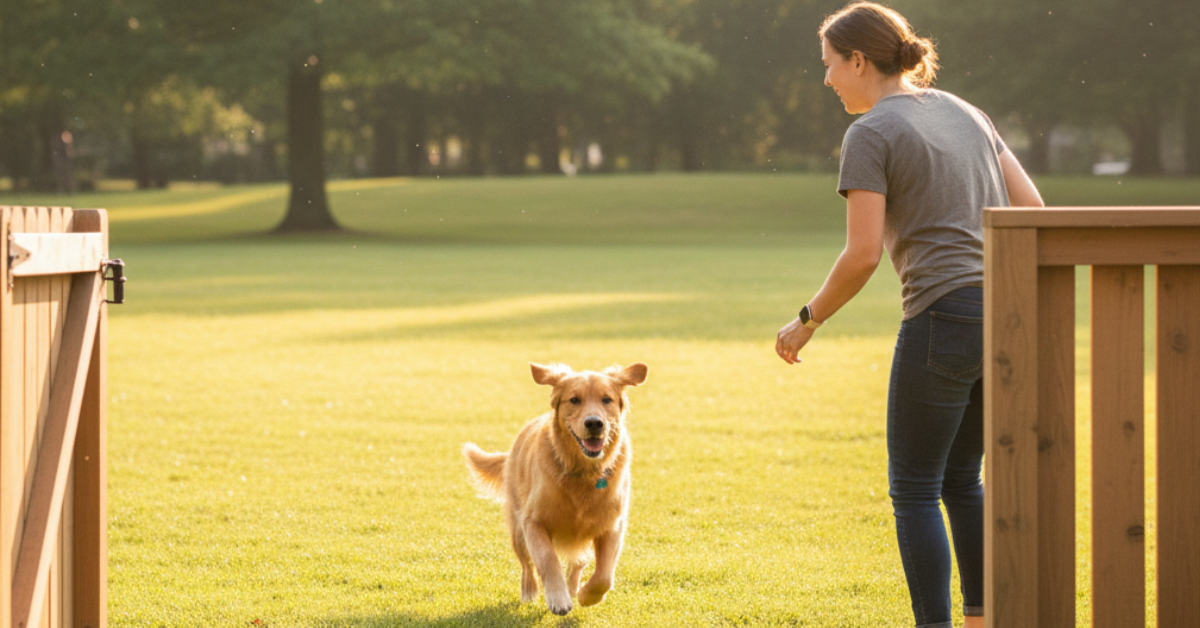
Recall Training & Microchip Management
Training and identification are long-term solutions that dramatically reduce the chances of permanent loss.
Recall Training: Teach Your Pet to Come Back
Reliable recall is one of the most powerful dog escape prevention tips.
Effective Recall Training Includes:
- Start indoors with minimal distractions
- Use positive reinforcement (treats, praise, toys)
- Practice daily in short sessions
- Gradually increase distractions and distance
- Never punish your dog for returning late
A well-trained dog is far more likely to return home even if they slip away.
Microchip Management Matters to Prevent Your Pet From Getting Lost Again
Microchips don’t track your pet, but they are critical for identification.
Key Microchip Safety Steps:
- Confirm your pet is microchipped
- Register the chip with a national database
- Keep your phone number and address updated
- Report your pet as missing immediately if they escape
Many pets are found but never reunited due to outdated microchip information—another major common pet safety mistake.
Community Alerts & Safety Routines
Preventing pet loss isn’t just about physical tools—it’s also about habits and community awareness.
Build a Pet Safety Routine
Consistency reduces risk.
Daily Safety Habits:
- Check doors and gates before letting your pet outside
- Secure windows and screens
- Use ID tags with readable contact details
- Attach collars before opening doors
- Do headcounts after visitors or deliveries
Routine checks take seconds but prevent hours of panic.
Leverage Your Community
Your neighbors can be your first line of defense.
Community-Based Prevention Tips:
- Inform neighbors if your pet is an escape artist
- Join local pet safety or neighborhood groups
- Share your contact info with nearby residents
- Post recent photos of your pet in community apps
If your pet does escape, community awareness ensures faster sightings and safer returns.
Avoiding Common Pet Safety Mistakes From Getting Lost Again
Understanding what not to do is just as important.
Mistakes That Increase Escape Risk
- Assuming your pet “would never run away”
- Leaving gates unlocked or doors open
- Letting pets roam without supervision
- Ignoring behavior changes or anxiety signs
- Delaying training until after an incident
Most repeat pet escapes are preventable with awareness and preparation.
Extra Dog Escape Prevention Tips
- Neuter or spay pets to reduce roaming behavior
- Address separation anxiety with training or enrichment
- Use GPS collars for added security
- Keep pets mentally and physically stimulated
- Update ID tags whenever your contact info changes
Prevention works best when multiple strategies are combined.
Final Thoughts to Prevent Your Pet From Getting Lost Again
Preventing your pet from getting lost again is about preparation, consistency, and responsibility. By strengthening fences and leash habits, focusing on recall training and microchip management, and creating strong community safety routines, you dramatically reduce the risk of future escapes.
This pet safety guide highlights how small changes can prevent big heartbreak. Avoid common pet safety mistakes, follow proven dog escape prevention tips, and give your pet the safest life possible—right at home where they belong.
Also read: Lost Dog Without Collar or Tags? Here’s What You Must Do
How to Find a Missing Dog Fast: Proven Steps Pet Owners Should Take
