


Losing a pet is one of the most stressful experiences any pet owner can face. Whether your dog slipped out the door or ran away during a walk, the immediate priority is to act quickly and strategically. Expanding your lost pet search radius effectively can make the difference between a quick reunion and a prolonged period of worry. This guide will help you understand how far pets can travel, how to reach shelters and vets in nearby towns, and how to structure a wide-reaching search campaign.
Understanding How Far Dogs Can Travel
Dogs are surprisingly mobile when they are scared, anxious, or curious. Small breeds may stay closer to home, hiding in nearby bushes or yards, but larger or more adventurous dogs can cover several miles in just a few hours. Certain factors, such as age, energy level, and familiarity with the neighborhood, also influence how far your pet might travel.
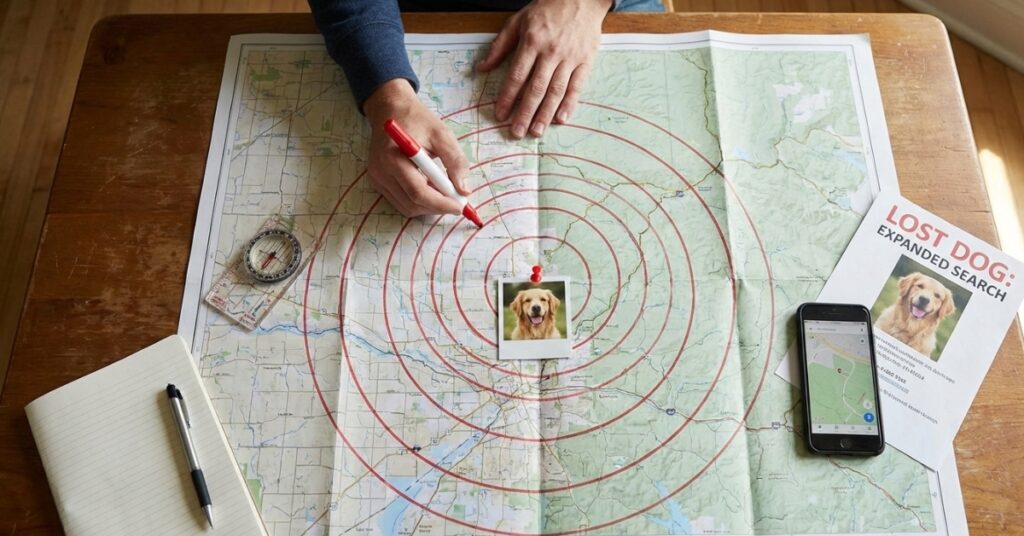
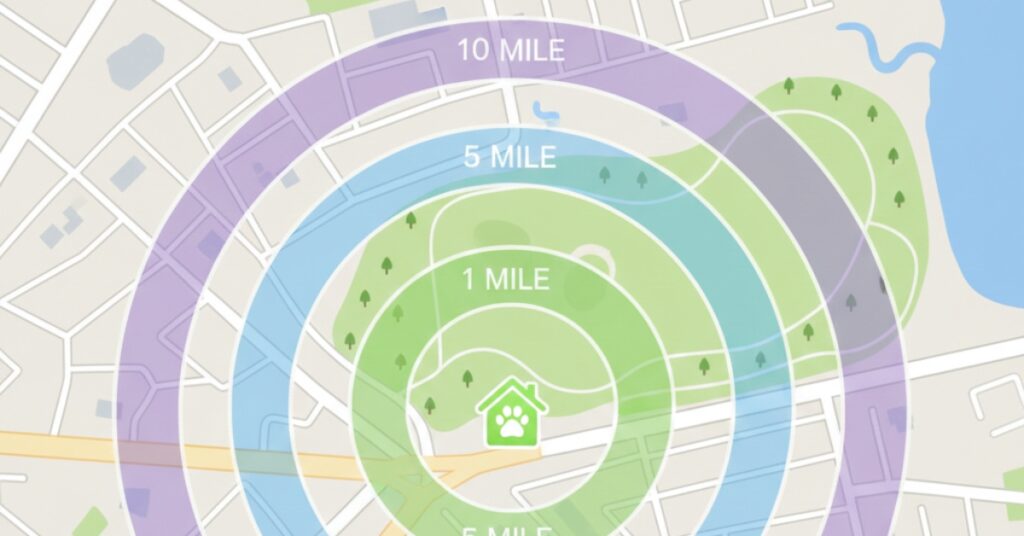
For example, a young and active dog may explore streets and parks far from your home, while a timid older dog may hide near familiar areas. Experts suggest starting your search within a 1-mile radius of the last known location and gradually expanding outward if the pet has not been found. Understanding this behavior is an essential first step in your lost pet search radius strategy, ensuring your efforts are focused in areas where your dog is most likely to be.

Calling Shelters & Vets in Nearby Towns
One common mistake pet owners make is contacting only local shelters. Pets often wander into neighboring towns, where they may be picked up by good Samaritans or brought to veterinary clinics for safety. Expanding your search to include nearby towns increases your chances of locating your pet quickly.
Here’s how to do it effectively:
- Make a comprehensive list: Include animal shelters, rescue groups, and veterinary clinics within a 10–20 mile radius.
- Share clear information: Provide a recent photo, a detailed description, and any distinguishing features of your dog.
- Follow up regularly: Shelters and clinics may receive multiple lost pets every day. Regular check-ins ensure your dog’s information stays on their radar.
This outreach forms the backbone of a successful dog ran away first steps plan, helping you cast a wider net while maintaining organization.
Creating Wider Search Campaigns
Beyond physical searches, digital tools allow you to alert a larger audience across a wider radius. Online campaigns are highly effective in spreading the word quickly and mobilizing communities.
- Social media: Post in neighborhood Facebook groups, Nextdoor communities, and Instagram using a clear photo and the last seen location.
- Lost pet apps: Platforms like PawBoost and Pet FBI notify nearby volunteers instantly.
- Flyers and posters: Place them in strategic locations such as parks, busy streets, grocery stores, and vet offices. Include a contact number and your pet’s photo.
Using multiple channels maximizes your outreach and ensures that even people outside your immediate area are aware of your missing pet.
Mapping Safe Zones & Sighting Points
When expanding your search radius, having a plan is critical. Dogs often hide in areas where they feel safe, such as shaded parks, backyards, quiet alleyways, or familiar walking routes. By mapping these safe zones and sighting points, you can search systematically rather than randomly.
- Mark areas where neighbors or witnesses reported sightings.
- Revisit parks, streets, and alleyways daily, especially during quiet hours.
- Leave familiar items, like your dog’s bed, blanket, or water bowl, near your home to help them find their way back.
A mapped approach ensures your search is strategic, allowing you to cover more ground efficiently.
Final Tips for Expanding Your Lost Pet Search Radius
- Act quickly: Time is critical when locating a lost pet.
- Communicate widely: Inform neighbors, friends, and local communities.
- Be patient and persistent: Pets sometimes return after days or even weeks.
By understanding how far your dog can travel, contacting shelters and veterinary clinics in nearby towns, creating effective search campaigns, and mapping safe zones, you can expand your lost pet search radius effectively. These steps increase the likelihood of a safe reunion and help you remain calm and organized during a stressful time.
lost pet search radius strategy
dog ran away first steps
lost dog shelters near me
Losing a pet can be frightening, but knowing how to expand your lost pet search radius effectively can make a huge difference. With the right strategy, communication, and search plan, you can increase your chances of a safe and speedy reunion with your dog.
Understanding How Far Dogs Can Travel
Dogs can cover surprising distances when they run away, depending on breed, size, and temperament. Small breeds often stay close to home, while larger or adventurous dogs can travel several miles in just a few hours.
- Start your search within a 1-mile radius.
- Gradually expand in concentric circles if your dog hasn’t been found.
- Act fast, because time is critical in recovering a lost pet.
lost pet search radius strategy, dog ran away first steps
Calling Shelters & Vets in Nearby Towns
Dogs often travel to neighboring towns, so contacting only your local shelters isn’t enough.
- Create a contact list of shelters, rescue organizations, and veterinary clinics within a 10–20 mile radius.
- Provide clear information including photos, distinguishing features, and last known location.
- Follow up consistently since shelters may see many lost pets daily.
This approach is an essential part of a lost pet search radius strategy and improves your chances of locating your dog.
Focus keywords: lost dog shelters near me, dog ran away first steps
Creating Wider Search Campaigns
Digital tools and local networks can help you extend your search radius beyond physical reach.
- Social media alerts: Post in neighborhood groups on Facebook, Nextdoor, and Instagram.
- Lost pet apps: Platforms like PawBoost or Pet FBI notify nearby volunteers.
- Flyers and posters: Place them in parks, local businesses, and busy streets around your expanded radius.
A multi-channel search ensures more eyes are looking for your missing pet.
Mapping Safe Zones & Sighting Points
Organize your search by identifying safe zones and likely sighting locations:
- Dogs often hide near shaded areas, backyards, or familiar walking paths.
- Mark reported sightings on a map and search systematically.
- Leave water, food, or familiar items near your home to attract your pet back.
A mapped approach turns your search into a strategic plan rather than random wandering.
Final Tips for Expanding Your Lost Pet Search Radius
- Start quickly: Immediate action increases the chance of recovery.
- Alert neighbors and local communities: Communication is key.
- Stay patient: Some pets return after days or even weeks.
By understanding how far your dog can travel, contacting shelters and vets in nearby towns, and creating a structured search plan, you can expand your lost pet search radius effectively and improve your odds of bringing your furry friend home safely.
Also Red the following
Lost Cat for 3 Days What You Should Do Next?
Emergency Signs in Dogs That Mean You Should Act Immediately
Common Pet Safety Mistakes That Put Dogs and Cats at Risk
