
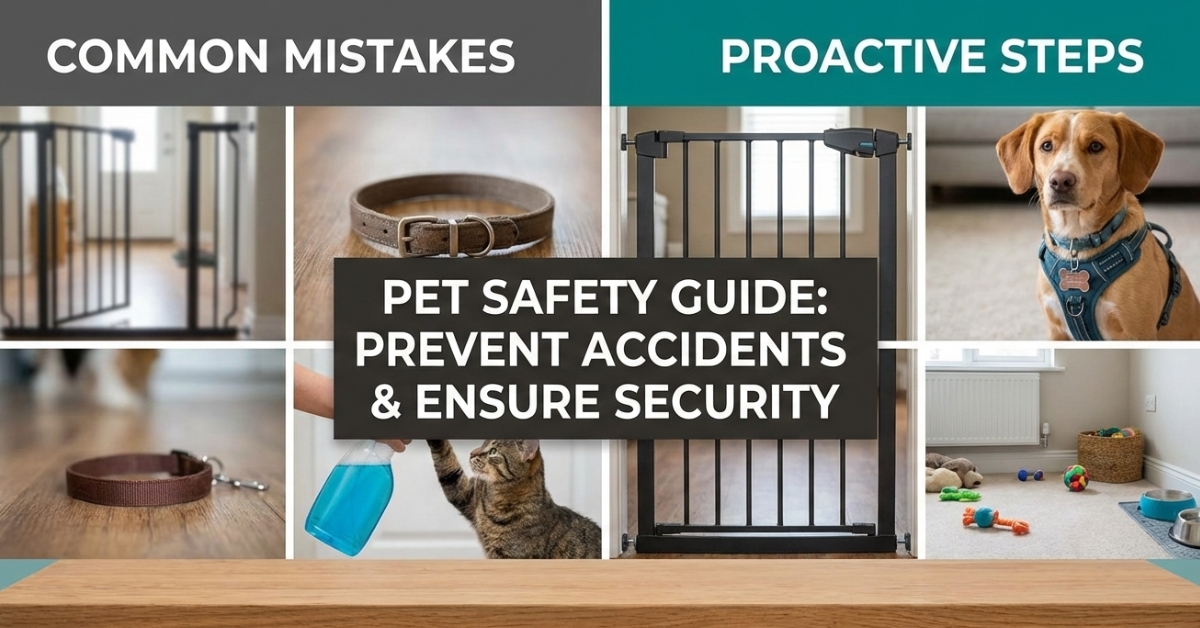
Owning a pet comes with immense joy, but it also comes with the responsibility of keeping them safe. Unfortunately, many pet owners unknowingly make mistakes that put dogs and cats at risk of accidents, escapes, or injuries. By understanding common pet safety mistakes and taking proactive steps, you can ensure your furry friends remain healthy, happy, and secure. This pet safety guide highlights key areas where mistakes often occur and how to prevent them.
Collars, Fences, and Leashes
One of the most frequent mistakes owners make is using ill-fitting collars, unreliable leashes, or poorly maintained fences. A collar that is too loose can slip off, while a damaged fence may allow a dog or cat to escape. Even small gaps in fences or unsecured gates can become an easy exit for a curious pet.
To prevent these risks:
- Ensure collars fit snugly but comfortably.
- Use breakaway collars for cats to prevent choking.
- Regularly inspect fences and gates for damage or weak spots.
- Choose durable, reliable leashes and harnesses for walks.
By paying attention to these details, you reduce the risk of escapes and accidents significantly. This is one of the most important dog escape prevention tips every owner should follow.
Outdoor Supervision & Recall Training
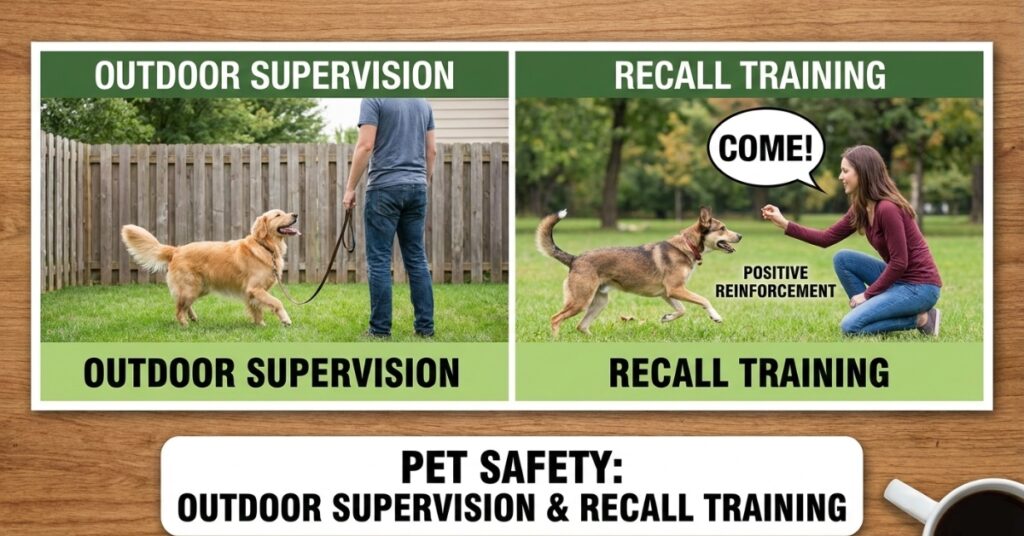
Pets, especially dogs, should not be left unsupervised outdoors. Even a secure yard can pose risks, including encounters with wildlife, traffic, or other animals. Outdoor supervision ensures that you can respond immediately if a pet is in danger or attempting to escape.
Recall training is another key safety measure. Teaching your dog to respond reliably to commands like “come” or “stay” allows you to maintain control in unpredictable situations. Consistent training, positive reinforcement, and safe outdoor routines not only protect your pets but also give you peace of mind.
Microchip & ID Tag Management
Even with the best fences, collars, and supervision, pets can sometimes get lost. One of the most overlooked mistakes is failing to maintain updated identification. Pets without ID tags or with outdated microchip information are far harder to recover.
To prevent this:
- Ensure your pet’s collar has a current ID tag with your phone number.
- Register your pet with a microchip and update your contact information regularly.
- Consider having a backup contact number in case your primary phone is unreachable.
Proper ID management is one of the easiest and most effective ways to ensure a lost pet is returned quickly and safely.
Preventing Escape Before It Happens
Prevention is always better than cure. Many escapes and accidents can be avoided by planning ahead.
- Always check that doors, gates, and windows are securely closed.
- Monitor pets during outdoor play and never leave them unattended near potential escape routes.
- Provide safe indoor spaces for pets who are prone to wandering or exploring.
- Combine proper collar use, supervision, and recall training for a comprehensive safety strategy.
By taking these preventive measures, you can drastically reduce the likelihood of escapes and keep your pets safe from harm.
Final Tips for Pet Safety
Understanding common pet safety mistakes is the first step toward proactive care. Consistently inspecting collars, fences, and leashes, maintaining outdoor supervision, training recall, and keeping ID information up to date are all essential practices. Following this pet safety guide not only protects your pets but also reduces the stress and worry associated with lost or injured animals.
Pets depend on us for safety. By addressing these common mistakes, you ensure they live longer, happier, and safer lives. Regular attention to these details makes a big difference in preventing accidents and escapes, making your home a secure environment for dogs and cats alike.
Pets bring joy, love, and companionship into our lives, but many owners unknowingly make mistakes that put dogs and cats at risk. Understanding and correcting these common pet safety mistakes is essential for keeping your furry friends safe and healthy.
Collars, Fences, and Leashes
One of the most common pet safety mistakes is improper use of collars, fences, and leashes. Loose collars can slip off, and poorly maintained fences may allow pets to escape. Always ensure collars fit properly, leashes are sturdy, and fences are secure. Using breakaway collars for cats and regularly checking fences can prevent accidents before they happen.
common pet safety mistakes, dog escape prevention tips
Outdoor Supervision & Recall Training
Pets left unsupervised outdoors are at a higher risk of accidents, encounters with wildlife, or running away. Supervising your dog or cat outside and practicing recall training are crucial safety measures. A well-trained pet responds to commands, reducing the risk of them running into dangerous areas or streets.
Microchip & ID Tag Management
Another often-overlooked mistake is not keeping ID tags or microchip information up to date. Pets can escape unexpectedly, and outdated information can prevent shelters or vets from contacting you. Make sure your contact details are current and check microchips regularly for functionality.
Preventing Escape Before It Happens
Preventing escapes is always better than searching for lost pets. Close doors and gates securely, monitor outdoor play, and provide safe spaces for pets inside and outside the home. Combining proper supervision, training, and identification ensures your pets stay safe while enjoying freedom.
Final Tips
By addressing these common pet safety mistakes, including proper collar use, outdoor supervision, and ID management, you can significantly reduce the risk of accidents or escapes. Always stay proactive, and your pets will be safer, happier, and more secure.
Read the following
My Dog Is Missing What Should I Do Immediately?
How to Find a Missing Dog Fast: Proven Steps Pet Owners Should Take
