
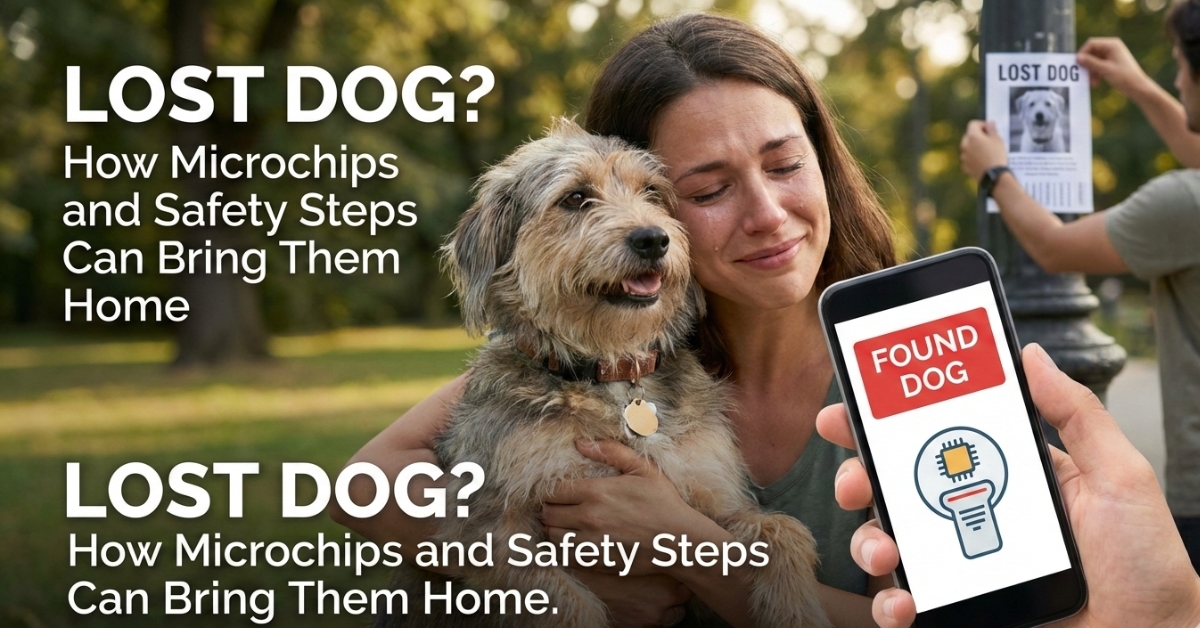
Losing a dog is every pet parent’s nightmare. One moment they’re there, the next they’re gone — and panic takes over.
If your dog is missing right now, time matters, but strategy matters even more.
Thousands of lost dogs are reunited every year not by luck, but because their owners followed the right steps — especially using microchips, smart searching, and social media correctly.
This guide combines:
- Veterinary advice
- Shelter protocols
- Real lost dog recovery stories
- Proven safety steps that work
If your dog is lost, start here.
First 24 Hours Checklist (This Is Critical)
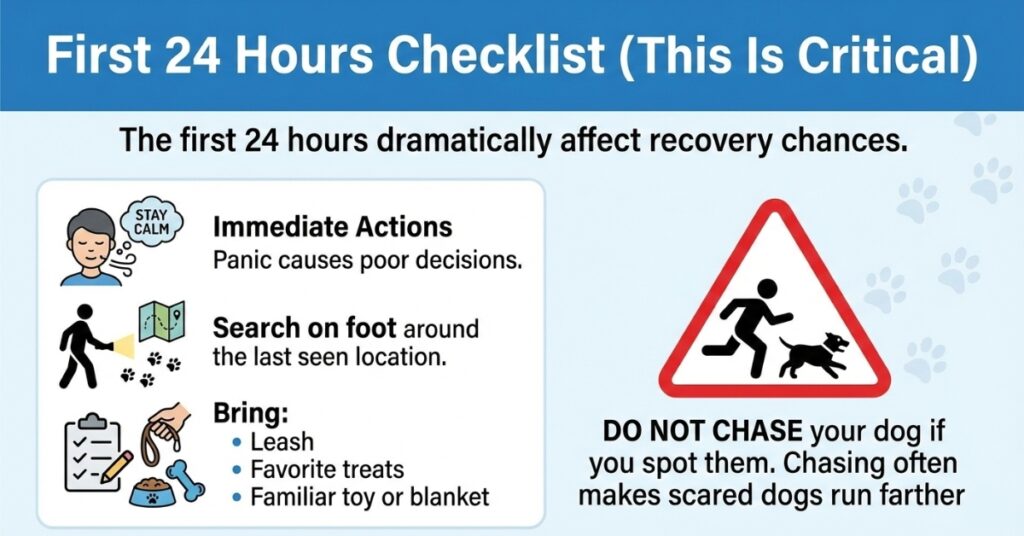
The first 24 hours dramatically affect recovery chances.
Immediate actions
- Stay calm — panic causes poor decisions
- Search on foot around the last seen location
- Bring:
- Leash
- Favorite treats
- Familiar toy or blanket
Do not chase your dog if you spot them. Chasing often makes scared dogs run farther.
Lost Dog Microchip Lookup — Do This Immediately
If your dog is microchipped, this step is non-negotiable.
What to do
- Call your microchip registry
- Mark your dog as LOST
- Confirm your phone number and email
- Ask about alert systems sent to vets & shelters
If you don’t know the registry, use:
PetMicrochipLookup.org
Important truth:
A microchip only works if it’s registered and updated.

Contact Animal Control, Shelters & Dog Wardens
Many lost dogs are picked up within hours.
Do not rely only on phone calls
- Visit shelters in person
- Check daily
- Contact shelters 20–50 miles away
Dogs can travel surprisingly far in a short time.
Most shelters legally hold dogs for only 5–7 days.
Use Social Media the Right Way (Not Random Posting)
Social media is one of the most powerful tools — if used strategically.
Where to post
- Local Facebook lost & found groups
- Nextdoor
- PawBoost
- PetFBI
- Finding Rover
- Community WhatsApp groups
Post format that works
- Clear photo (close-up + full body)
- “LOST DOG” in bold
- Location & date last seen
- Phone number
- Short description
Ask people to share, not just like.
Create High-Visibility Lost Dog Posters
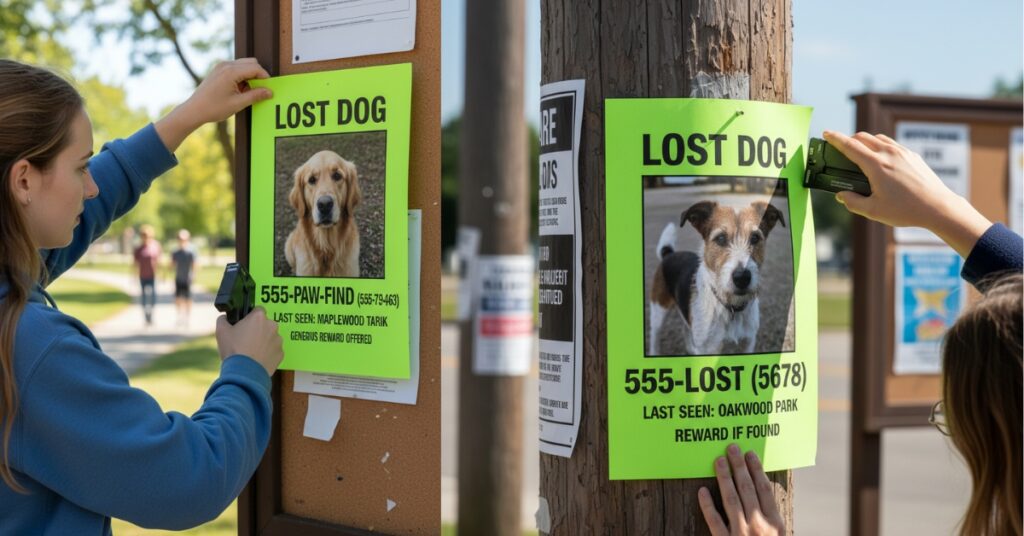
Posters still work — especially for people not on social media.
Poster essentials
- Bright, clear photo
- “LOST DOG” headline
- Large phone number
- Location last seen
- Optional reward (often increases response)
Where to place
- Street poles
- Grocery stores
- Vet clinics
- Parks
- Community boards
Use fluorescent paper for visibility.
Leave Familiar Scents Near Home
If your dog is hiding nearby:
- Leave food and water outside
- Place:
- Dog’s bed
- Blanket
- Your worn T-shirt
Many dogs return late at night when it’s quiet.
If Your Dog Is Spotted But Won’t Come Close
This is common with frightened dogs.
What works
- Do NOT chase
- Leave food where sightings occur
- Use motion-activated cameras
- Contact rescue groups for humane traps
Many successful recoveries happen this way.
Real Lost Dog Recovery Stories (Why You Shouldn’t Give Up)
✔️ Dogs found after weeks
✔️ Dogs reunited after months
✔️ Dogs scanned at vets because of microchips
✔️ Dogs recognized from social media posts
One common factor:
Owners didn’t stop searching.
What If You Suspect Theft?
- File a police report
- Inform the microchip registry (blocks ownership changes)
- Continue all lost dog steps
- Share details with shelters and vets
When Your Dog Comes Home
Once reunited:
- Visit a vet immediately
- Check for dehydration, injuries, infections
- Update microchip details
- Review fencing, leashes, recall training
Final Words: Don’t Lose Hope
Unless proven otherwise, assume this:
Your dog is alive and wants to come home.
Lost dogs survive, adapt, and are found — often because their owners kept going when hope felt thin.
You’re not alone.
And this guide gives you the best possible chance of bringing your dog home safely.

2 thoughts on “Lost Dog? How Microchips and Safety Steps Can Bring Them Home”