
If Your Dog Ran Away and Never Came Back — Read This First
The silence is the worst part. No bark at the door. No paws on the floor. Just the nauseating, hollow feeling of knowing your dog is out there somewhere — and you don’t know where. What to Do If Your Dog Runs Away and Never Comes Backhttps://savethislifenow.com/my-dog-ran-away-and-never-came-back/
If you’ve searched “my dog ran away and never came back” in a panic, you are not alone, and you are not out of options. Every single day, thousands of dog owners go through exactly this. And the statistics — real, research-backed statistics — are more hopeful than you might believe right now.
Studies consistently show that 71% to 93% of lost dogs are found and returned to their owners. One of the first major U.S. studies, reviewing over 800 cases, found a 93% recovery rate. A 2021 analysis of over 30,000 stray dogs in Dallas found that about 70% of lost dogs were recovered within one mile of their home. Even more striking: 42% were found less than 400 feet away — about one city block.
Your dog is not gone. Your dog is somewhere. And what you do in the next hours, days, and weeks will determine whether you get them back.
This is the complete, phase-by-phase action plan — built from veterinary guidance, animal behavior research, and real recovery stories — for every stage of a dog going missing. From the first 60 minutes to long-term campaigns weeks later.
If your dog was recently lost and you’re looking for our dedicated resource page: My Dog Ran Away and Never Came Back — SaveThisLifeNow.com
Before Anything Else: Understanding Why Dogs Run and Don’t Come Back
Before diving into the action plan, understanding why your dog ran — and why they haven’t returned — will help you search smarter, not just harder.
Common Reasons Dogs Run Away
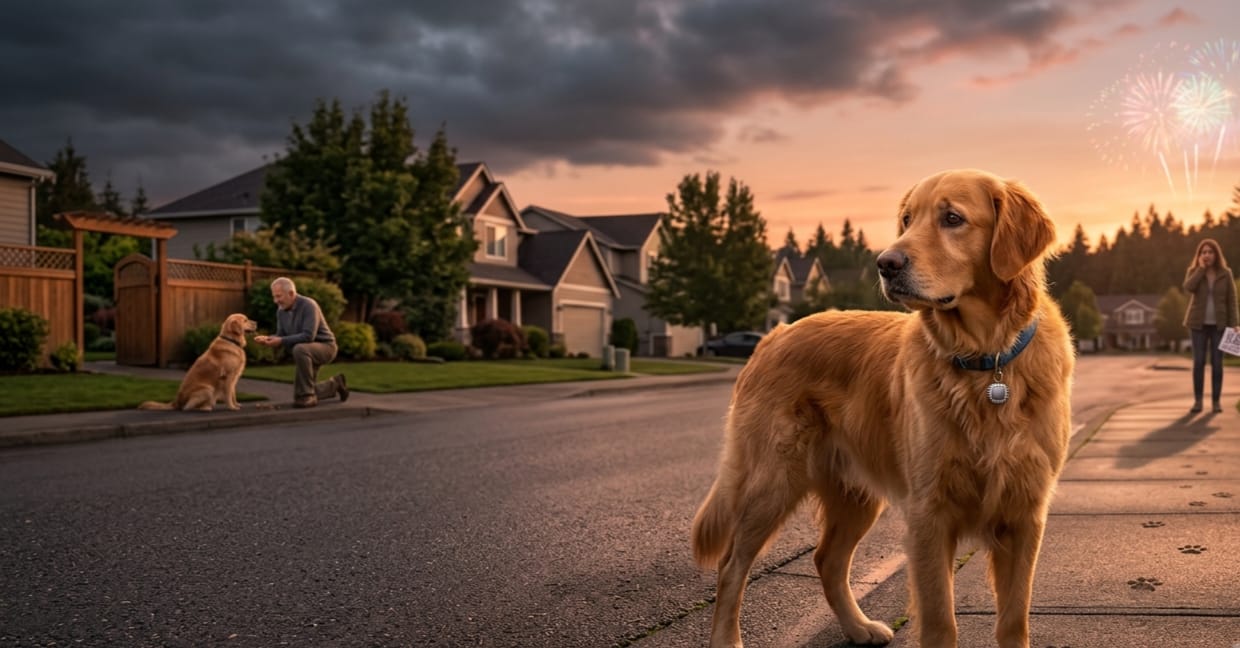
Fear and panic — Fireworks, thunderstorms, construction noise, or a sudden fright can trigger a dog’s fight-or-flight instinct. A panicked dog can cover remarkable distances and often enters what experts call “survival mode” — a state where they avoid contact with all people, including their own owners. This is critical to understand because your dog may be very close to you but actively hiding from humans.
Mating instinct — An unneutered male can detect a female in heat from miles away. An unspayed female will actively seek a mate. Both will roam far and persistently.
Boredom and under-stimulation — A dog that isn’t getting enough exercise or mental engagement will find its own adventure. These dogs usually don’t wander far.
Prey drive — A squirrel, rabbit, deer, or neighborhood cat triggers a chase. The dog follows instinct at full speed into unfamiliar territory and loses its bearings.
Separation anxiety — When left alone, anxious dogs attempt to escape to find their owners. They may have bolted while trying to reach you.
New environment — Dogs recently moved to a new home, brought to a vacation rental, or boarded somewhere unfamiliar are at high risk of escape. They may attempt to return to their old home.
Why Your Dog May Not Have Come Back Yet
This question torments every owner. Here are the real reasons — and none of them mean you should stop searching:
- They’re in survival mode. A scared dog behaves like prey, not a pet. They avoid all humans — including you. They may be within a block of your home but running from anyone who approaches.
- They’re injured or trapped. Your dog may be stuck inside a shed, garage, storm drain, ditch, or abandoned structure. They’re waiting, not wandering.
- Someone has them. People who find stray dogs often transport them home, taking them out of your immediate search area before you can find them there.
- They haven’t been scanned yet. If your dog isn’t microchipped — or the chip isn’t registered — any shelter holding them has no way to contact you.
- The search hasn’t reached the right person yet. Your flyer didn’t reach the woman who saw a dog matching your description on Thursday. Your social post wasn’t seen by the family three towns over who’s been feeding a stray.
Critical reading: Can You Track a Dog With a Microchip? Myth vs. Reality — SaveThisLifeNow.com
The Rule That Changes Everything: Never Chase a Running Dog

Before you step outside, internalize this single most important rule:
Do not chase your dog.
Every instinct you have will scream at you to run after them. Every instinct is wrong. Chasing your dog activates their prey drive or escalates their fear response. A scared dog will run harder, faster, and farther. A playful dog thinks you’ve started a game. Either way, chasing pushes your dog further from you.
Instead, when your dog is visible:
- Crouch or sit down — get low to the ground and make yourself small and nonthreatening
- Turn and run in the opposite direction — most dogs will instinctively chase you
- Open your car door — if your dog loves car rides, the sight and sound of the car door can stop them instantly
- Drop to the ground and pretend to be interested in something — curiosity will draw many dogs back
- Use your happiest, highest voice — not panicked, not angry, not desperate. Happy and exciting
- Shake a treat bag or their food bowl — the sound of food often overrides fear
Now. The action plan.
PHASE 1: The First 60 Minutes — Your Highest-Impact Window
The first hour after your dog runs is the most critical. Most dogs that are recovered quickly are found because their owner acted fast and decisively in this window.
Step 1: Do Not Panic. Stop and Think.
Panic makes you scatter. Take 60 seconds to breathe, grab your phone, grab treats, and make a quick mental note: when did you last see your dog? Where? Which direction did they go? What were they doing?
Step 2: Conduct an Immediate Local Search
Before calling anyone or posting online, physically search your immediate surroundings. Carry treats. Move methodically, not frantically.
Check these locations first:
- Every room inside your home — dogs sometimes hide indoors after a fright
- Your basement, attic, cellar, garage, and any closed room
- Under beds, behind furniture, in closets
- Your yard, shed, under decks, behind bushes and shrubs
- Your immediate neighbors’ yards and driveways
- The street your dog ran down — dogs often stop just around the corner
Many dogs hide nearby when scared, even if they do not respond right away. Your dog may be 50 feet from your door, silent and frozen.
Step 3: Leave Your Yard Open
Open every gate. Leave your front and back doors open if safe to do so. Put your dog’s bed, a worn item of your clothing, and their food bowl outside near the entrance. The scent of their own space — and yours — is a powerful homing beacon.
A missing dog’s sense of smell can detect your scent from over 11 miles away. Their 300 million scent receptors (versus 6 million in humans) make olfactory navigation a superpower. Give that superpower something to follow.
Step 4: Enlist Immediate Help
Don’t search alone. Within the first hour:
- Knock on every door within two to three blocks
- Ask neighbors to check their garages, sheds, under their decks
- Ask delivery drivers or mail carriers you see — they cover your neighborhood daily
- Call a family member or friend to come help immediately
More eyes on the ground in the first hour dramatically increases recovery odds.
Step 5: Check Your Dog’s Microchip Status RIGHT NOW
While a family member searches the neighborhood, pull up your dog’s microchip information. Verify that the chip is registered and that your contact details are completely current — phone number, email, address. If you’ve moved or changed your number since registration, update it immediately.
Do this now: Free Pet Microchip Lookup Tool — SaveThisLifeNow.com
Update for free: How to Update Your Dog Microchip Contact Information for Free — SaveThisLifeNow.com
PHASE 2: Hours 2–24 — Launch Your Full Recovery Campaign
If your dog isn’t found in the first hour, it’s time to treat the search like a coordinated campaign. Speed and coverage are everything.
Step 6: Call Every Local Shelter and Animal Control — Right Now
Do not wait. Call every shelter, animal control facility, and humane society within a 60-mile radius of where your dog was last seen. Animal shelters have hold periods — often 72 hours to 5 days — before animals are made available for adoption or other outcomes. If your dog is brought in and you haven’t reported them missing, that hold period is your window.
What to tell them:
- Your dog’s breed, sex, age, weight, color, and distinctive markings
- Your dog’s microchip number (have it ready)
- The date, time, and location your dog was last seen
- Your phone number and a callback name
Then visit in person. A photo in your hand is worth 10 verbal descriptions. Go in, meet the staff, leave a flyer at the front desk. Go back every 2–3 days.
Also call:
- Local veterinary clinics (someone may have brought in a found dog)
- Local police non-emergency line (especially if theft is possible)
- Local animal rescue organizations
- Breed-specific rescue groups in your area
Step 7: Post on Social Media Immediately
Social media has reunited dogs missing for years. Do not underestimate it.
Facebook: Post on your personal page AND every local community group, lost-and-found pet group, and neighborhood page within your search radius. Post the same on Nextdoor, which has a dedicated lost-pet feature.
What your post must include:
- A clear, recent photo — head-on and side profile if possible
- Your dog’s breed, age, sex, weight, color, and any unique markings or features
- Where and when they were last seen (include a map pin)
- “Do NOT chase — please call [your number] immediately if spotted”
- Whether your dog is microchipped
- A reward notice if you’re offering one (keeps posts shared)
A Basset Hound was returned home after a 41-day search because of a single Facebook post. A family found their dog — missing for three years — through a listing posted by their local police department. Post everywhere, and encourage shares explicitly.
Step 8: Create and Distribute Lost Dog Flyers
Physical flyers work. Print them, laminate them, and post them everywhere within a two-mile radius. Use a large, clear photo. Use large text. Include your phone number in tear-off strips at the bottom.
Post flyers at:
- Every telephone pole and street sign on every block near your last known location
- Grocery stores, laundromats, coffee shops, and pharmacies
- Dog parks, pet supply stores, groomers, and vet clinics
- Schools, community centers, and churches
- Gas stations and convenience stores
Digital flyers: Submit your flyer to PetFBI, PetAmberAlert, Nextdoor, and the lost-pet sections of your local Craigslist. Some platforms allow you to target geographic areas with digital flyer campaigns.
Step 9: Use Scent as a Recovery Tool
Take a piece of your worn, unwashed clothing and leave it at the last known location. Your scent mixed with familiar smells is a homing signal. Leave your dog’s bedding outside as well. The combination of their own scent and yours creates a powerful olfactory anchor.
Some owners leave food outside — but be strategic. Don’t leave so much that it attracts other animals and scent-masks your dog’s smell in the area.
Step 10: Set Up a Motion-Activated Camera at Your Home
Many dogs come home at night when no one is watching — only to find no way in and leave again. A motion-activated camera or trail camera aimed at your front or back entrance will capture nighttime visits. Place familiar scented items and water near the camera. Check the footage every morning.
PHASE 3: Days 2–7 — Widening the Net
If your dog is still missing after 24 hours, the search changes character. Recovery rates after 24 hours drop from around 93% to approximately 60% — but that still means you are more likely to find your dog than not.
Step 11: Expand Your Physical Search Radius
Dogs travel farther than most owners realize. Depending on temperament and why they ran:
- A bored, outgoing dog typically stays within 1–2 miles
- A scared, panicked dog can travel 5–10+ miles in a single day
- A dog following a scent trail (prey or mating instinct) may travel 10–20 miles
Using a map, divide your expanded search area into quadrants. Assign different people to different zones. Do this on foot, by car, and on a bicycle. Check at different times of day — including dawn and dusk, when scared dogs are most likely to emerge from hiding.
Specifically search:
- Dense vegetation, wooded areas, and overgrown lots — scared dogs hide in cover
- Fields, farms, and agricultural areas — frightened dogs are drawn to quiet spaces
- Drainage ditches, culverts, and storm drains — dogs can become trapped
- Abandoned buildings and structures
- Anywhere with consistent food access — behind restaurants, near dumpsters, around outdoor food areas
Step 12: Contact Breed-Specific Rescue Groups
If you own a recognizable breed, contact every breed-specific rescue group within a 50-mile radius. These organizations are often the first called when someone finds a purebred or distinct-mix dog. They maintain networks, share photos actively, and can mobilize fast.
Step 13: Register on Every Lost Pet Database
File a lost pet report on every major database simultaneously:
- PetFBI.org — free, national, searchable
- Petco Love Lost — free, uses facial recognition for pet matching
- Finding Rover — uses photo-matching technology
- PawMaw — allows you to report lost pets and post across multiple channels
- PetAmberAlert.com — distributes to local shelters and vet clinics
- Nextdoor — hyperlocal, neighbor-to-neighbor visibility
Check these databases daily. Look at the “found” section, not just the “lost” section. Someone may have found your dog and posted them as found before you filed the lost report.
Step 14: Place a Humane Trap
A humane trap (also called a live trap) baited with your dog’s favorite food can be transformational — especially for scared dogs in survival mode who will not approach humans.
A panicked dog in survival mode may view all humans as predators, including its owner. They will not come to you. They will come to food, alone, in silence. A trail camera near the trap allows you to monitor remotely.
Important: Check local ordinances before setting a humane trap. In some jurisdictions, traps may require a permit or have placement restrictions. Set the trap at the last known sighting location or near your home entrance.
PHASE 4: Week 2 and Beyond — Never-Give-Up Strategies
Once your dog has been missing for more than a week, many owners begin to despair. This is the most dangerous phase — not because the dog is necessarily lost forever, but because search efforts typically diminish precisely when long-term persistence is most needed.
The truth: A Fox Terrier named Duchess was found after 12 years missing, nearly 1,000 miles from home, because her owner kept her microchip registration updated for over a decade. An 8-pound Dachshund named Valerie survived 529 days in the wilderness of Kangaroo Island, Australia. A Basset Hound came home after 41 days. Dogs are found months and years later, regularly and around the world.
Step 15: Refresh Your Flyers and Posts Monthly
Flyers weather. Posts age. People who see your post in week four are different people from those who saw it in week one. Refresh every flyer. Repost with an update — “still missing, week 3” posts often get more engagement than original posts. People root for the underdog story (pun intended).
Step 16: Hire a Professional Missing Animal Response Technician (MAR)
Missing Animal Response Technicians are trained specialists who use animal behavior science, scent-tracking, and trapping techniques to locate missing pets. Organizations like the Lost Pet Research & Recovery network train MAR technicians specifically for long-term dog recovery.
MAR technicians know that a displaced, panicked dog is in “prey mode” and understand the three-zone approach model — the Awareness Zone, Alert Zone, and Action Zone — for approaching a dog that will flee from any perceived predator, including you. If your dog is genuinely in survival mode, a professional can make the difference.
Step 17: Use a “Lure Dog” — A Canine Search Partner
Dogs respond to other dogs. A friendly, calm dog on a long leash near the last sighting area can coax a hiding or panicked dog out of cover when no human approach will work. If you have a friend with a calm, sociable dog, this is worth trying — especially in areas where sightings have been reported.
Step 18: Target Dusk and Dawn Searches
Scared dogs are most active during low-light hours when human foot traffic is minimal. If daytime searches have yielded nothing, shift your physical searches to the hour before sunrise and the hour after sunset. Bring a headlamp, treats, and your dog’s most loved toy.
Step 19: Expand to Shelters 100+ Miles Away
People transport found dogs. This happens more than most owners realize. A dog found by a traveler, a delivery driver, or someone passing through can end up in a shelter in another county or state. After week two, begin calling shelters and checking databases in a 100-mile radius.
Step 20: Run Targeted Social Media Ads
A $20–$50 Facebook ad targeted to your specific geographic area can reach tens of thousands of local residents your organic posts never reached. Upload a clear photo, write a compelling short description, set your target radius to 10–25 miles, and run it for 7 days. This is one of the highest-leverage steps in a long-term search.
What to Do When Someone Reports a Sighting
This is a critical moment. Handle it wrong and you push your dog further away.
When you receive a sighting report:
- Ask the caller to stay on the phone — if they have a cell phone, ask them to track your dog’s movement while you drive to the location
- Go alone or with one other person — a crowd approaching a scared dog will cause it to bolt
- Do not run toward your dog — approach slowly, from the side, avoiding direct eye contact
- Crouch down and call in a happy, calm voice — bring their favorite treats or toy
- Do not try to grab them — if they approach you, let them sniff first. Grabbing causes a second flight response.
- Have a leash ready — but loop it gently when they’re calm, not the moment they reach you
If your dog bolts again, don’t chase. Note the exact location, leave a scent trail back from that point toward your home, set a trap, and update your search team.
The Emotional Truth: Grief, Guilt, and Keeping Going
If your dog ran away and hasn’t come back, you are carrying something that is genuinely, legitimately painful. The ambiguous loss of not knowing — whether they are safe, whether they are scared, whether they are suffering — is one of the most psychologically difficult kinds of grief there is.
You may blame yourself. You may replay the moment they ran a hundred times. You may alternate between hope and despair every hour.
Some things to hold onto:
It is almost never your fault in the way you’re imagining it. Dogs run for instinctive reasons — fear, smell, drive. Not because of your failure to love them enough.
Your dog is likely still alive. Studies consistently show 71–93% recovery rates. Most are found within 1 mile. Most are in someone’s care or hiding somewhere safe, waiting.
Giving up reduces odds to zero. The single variable most correlated with recovery is persistence. Owners who keep searching, keep posting, and keep their microchip updated — sometimes for years — are the ones who get the call that their dog was found.
Do not stop. Set a daily routine for your search. Give yourself permission to grieve, and then take one more step.
Additional support: My Dog Ran Away and Never Came Back — SaveThisLifeNow.com
The Complete Recovery Toolkit: Every Resource You Need
Immediate action:
- Call local shelters and animal control
- Post on Nextdoor, Facebook community groups, personal page
- Create and distribute physical flyers
Digital databases (file on all of them):
- PetFBI.org
- Petco Love Lost (petcolove.org/lost)
- Finding Rover (findingrover.com)
- PetAmberAlert.com
- PawMaw.com
Phone contacts to make immediately:
- All shelters within 60 miles
- All vet clinics in your area
- Local police non-emergency line
- Breed-specific rescue groups
Equipment that helps:
- Humane live trap (available at hardware stores or animal shelters)
- Motion-activated trail camera
- Headlamp for dawn/dusk searches
- Long-handled treat bags to leave at sighting locations
Technology:
- Facebook targeted ads ($20–$50 investment with wide reach)
- GPS tracker — Best GPS Trackers for Dogs 2025 — SaveThisLifeNow.com (for prevention, and to have ready for your next dog)
Microchip:
- Verify registration immediately: Free Microchip Lookup Tool — SaveThisLifeNow.com
- Update contact info for free: Update Dog Microchip Contact Information — SaveThisLifeNow.com
Prevention: After Your Dog Comes Home (or Before They Run Again)
When your dog comes home — and statistically, they likely will — the reunion is everything. Do not scold them. Do not show anger. Every positive response to their return makes it more likely they will associate coming home with safety and reward.
Then, as soon as they’re home and settled, address the prevention layer:
Secure your perimeter. Check every fence panel, gate latch, gap under the fence, and climbable surface in your yard. What looked escape-proof before was clearly not. Many owners use a combination of taller fencing, coyote rollers, dig barriers, and self-latching gates.
Microchip if you haven’t already. If your dog wasn’t chipped, do it this week. If they were but the chip wasn’t registered or the info was outdated, fix both immediately. Dogs with microchips are returned to their owners at 2–3x the rate of unchipped dogs.
Add a GPS tracker. A microchip tells you who your dog is after they’re found. A GPS tracker tells you where they are before someone else finds them. Both matter.
Recall training. The single behavioral intervention most likely to prevent a future escape turning into a long-term missing situation is a rock-solid recall command. Enroll in a class, hire a trainer, or practice daily — a dog that comes reliably when called can be stopped at the moment of potential escape before it becomes a crisis.
Complete prevention plan: Complete Dog Safety Checklist: Microchip, GPS, and ID Tags — SaveThisLifeNow.com
**Dog Microchip Registration Cost: What You Need to Know — SaveThisLifeNow.com](https://www.savethislifenow.com/dog-microchip-registration-cost)
Frequently Asked Questions
My dog ran away and never came back — is there still hope after weeks?
Yes. Absolutely. Research shows dogs have been found weeks, months, and even years after going missing. A Fox Terrier was reunited with her owner after 12 years because the microchip was kept current. A Dachshund survived 529 days in the wild before being rescued. Do not let time be the reason you stop. Keep your microchip updated, keep posting, and keep checking shelters.
How far do dogs typically travel when they run away?
Research on over 30,000 stray dogs shows that about 70% are found within one mile of where they went missing, and 42% were found within 400 feet — roughly one city block. Scared dogs in survival mode may travel much farther, but the majority stay close to the last known location.
What is survival mode and why won’t my dog come to me?
A panicked dog enters a survival or “displaced” state in which they behave like prey rather than a pet. All humans — including their owner — can register as a threat. This is not a reflection of your relationship with your dog; it is pure biology. A dog in survival mode may be visible but will run from you. Approach from the side, crouching, without eye contact. Use food, not human contact, to draw them in. A humane trap is often the most effective tool for dogs in this state.
Should I leave food out for my lost dog?
Yes, strategically. Leave your dog’s familiar food near your home entrance alongside your worn clothing and their bedding. Set a trail camera to monitor who visits. In areas where sightings have occurred, bait a humane trap with high-value food like rotisserie chicken or a favorite treat.
My dog was never microchipped. Does that end my chances?
No — but it significantly complicates them. Shelters scan every stray that comes in. Without a chip, your dog cannot be identified electronically. Physical flyers, social media, and direct shelter visits become even more critical. If your dog is found while you’re reading this, get them chipped immediately so this gap is closed.
How often should I check shelters?
Visit in person — don’t just call — every 2–3 days. Shelter staff change, animals move, descriptions get misread. Showing up with a photo ensures your dog’s face is seen by the people handling animals every day.
More guidance: How Does a Pet Microchip Work? — SaveThisLifeNow.com
Your Timeline at a Glance
| Time Window | Priority Actions |
|---|---|
| First 60 minutes | Search yard/neighborhood, open gates, leave scent items, recruit immediate help, verify microchip |
| Hours 2–24 | Call all shelters, post on social media, print and distribute flyers, set trail camera |
| Days 2–7 | Expand physical search, set humane trap, register on all lost pet databases, contact rescue groups |
| Weeks 2–4 | Refresh flyers and posts, consider MAR technician, run targeted Facebook ads, expand shelter calls to 100 miles |
| Month 2+ | Monthly flyer refresh, update microchip, keep all listings active, never stop checking shelters |
The One Thing That Changes Every Outcome
You can do everything right. Post everywhere. Search every day. Print a thousand flyers.
But the single most leveraged action — the one that has reunited dogs missing for years, including 12-year separations and cross-country recoveries — is keeping a registered, up-to-date microchip.
When your dog is found, the first thing any shelter or vet clinic will do is scan for a chip. If that chip is registered and has your current phone number, the call comes within hours. If it isn’t — the trail goes cold.
Do this right now, before another hour passes:
Check Your Dog’s Microchip Status — Free Lookup — SaveThisLifeNow.com
Your dog is somewhere. The plan is here. Start with Step 1.
Internal Links Summary (SaveThisLifeNow.com)
| Anchor Text | Target URL | Purpose |
|---|---|---|
| My Dog Ran Away and Never Came Back | /my-dog-ran-away-and-never-came-back | GSC top query — linked in paragraph 1 & body |
| Free Pet Microchip Lookup Tool | /microchip-lookup | Conversion CTA — linked 3× |
| Update Dog Microchip Contact Information Free | /update-dog-microchip-contact-information-free | Pet Microchip Guides cross-link |
| Dog Microchip Registration Cost | /dog-microchip-registration-cost | Pet Microchip Guides cross-link |
| Can You Track a Dog With a Microchip? | /can-you-track-dog-with-microchip-gps | Pet Safety Tips cross-link |
| Best GPS Trackers for Dogs 2025 | /best-gps-trackers-dogs | Smart Trackers category cross-link |
| Complete Dog Safety Checklist | /complete-dog-safety-checklist | Hub page cross-link |
| How Does a Pet Microchip Work? | /how-pet-microchip-works | Foundational pillar cross-link |
